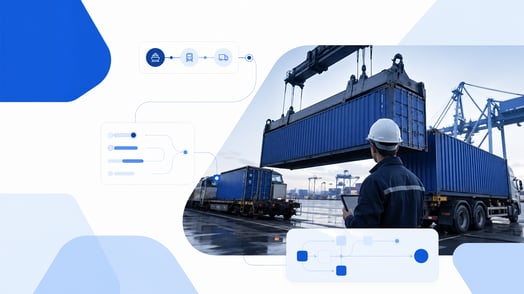
Managing transportation across multiple modes has become increasingly complex.
Shippers, manufacturers, retailers, and freight forwarders must coordinate road, rail, ocean, air, and inland waterway transport while controlling costs, reducing emissions, and maintaining service levels.
This is why multimodal transportation management systems (TMS) have become essential.
A modern multimodal TMS enables organizations to plan, execute, monitor, and optimize transportation flows across several modes within a single platform.
In this guide, you'll learn what a multimodal TMS is, how it differs from traditional transportation software, its key benefits, and how to select the right solution for your business.
What is a multimodal TMS?
A multimodal Transportation Management System (TMS) is software designed to manage transportation operations involving multiple transport modes within a single supply chain.
Unlike traditional transportation software focused primarily on road freight, a multimodal TMS can coordinate:
- Road transportation
- Rail transportation
- Ocean freight
- Air freight
- Inland waterway transport
The platform centralizes planning, execution, tracking, documentation, carrier management, and performance reporting across all transportation modes.
To better understand the fundamentals of a transportation management system, it's important to recognize that multimodal solutions extend traditional TMS capabilities beyond a single transportation mode.
Multimodal vs intermodal transportation: what's the difference?
The terms are often confused, but they are not identical.
Multimodal transportation
Multimodal transport combines two or more transport modes within a single shipment.
Goods may be transferred between different loading units during the journey.
Examples include:
- Road + rail
- Ocean + road
- Air + road
- Ocean + rail + road
Intermodal transportation
Intermodal transportation is a specific form of multimodal transport.
The shipment remains in the same loading unit throughout the entire journey, typically:
- ISO containers
- Swap bodies
- Intermodal trailers
Only the transport mode changes.
Understanding this distinction is important because not every multimodal TMS offers advanced intermodal functionality.
Why companies are investing in multimodal TMS software
Transportation networks continue to become more complex.
Organizations face increasing pressure to:
- Reduce logistics costs
- Improve supply chain resilience
- Increase visibility
- Meet sustainability objectives
- Manage transportation disruptions
A multimodal TMS provides a structured framework to address these challenges.
Five measurable benefits of a multimodal TMS
Lower transportation costs
One of the primary reasons companies invest in multimodal transportation software is cost reduction.
By comparing transportation modes and carrier rates in real time, organizations can select the most cost-effective option for each shipment.
Companies frequently report transportation savings ranging from 10% to 15% after implementing a multimodal TMS. These savings often contribute directly to broader initiatives aimed at reducing supply chain costs.
Reduced carbon emissions
Transportation remains one of the largest contributors to supply chain emissions.
A multimodal strategy enables companies to shift freight from road transport to lower-emission alternatives such as rail transport or inland waterways whenever possible.
A multimodal TMS helps identify these opportunities automatically while generating carbon reporting data required for sustainability initiatives.
Improved reliability at transfer points
Transfers between transportation modes often create operational risks.
Ports, rail terminals, airports, and distribution centers introduce potential delays and disruptions.
A multimodal TMS improves coordination across these transfer points and provides proactive alerts when issues arise.
End-to-end visibility
Supply chains involving multiple transportation providers often suffer from fragmented information.
A multimodal TMS consolidates data from:
- Carriers
- Ports
- Rail operators
- Airlines
- Visibility providers
This creates a single source of truth across the transportation network through advanced Shipment Tracking capabilities.
Better performance management
Organizations can compare transportation performance across all modes using consistent KPIs such as:
- Cost per shipment
- Transit time
- Service level
- Carrier performance
- CO₂ emissions
These metrics are often consolidated into a centralized supply chain dashboard to support decision-making and continuous improvement.
Key features of a multimodal TMS
Not all transportation management systems provide the same capabilities.
The most advanced multimodal platforms typically include the following functionality.
Transportation planning and optimization
The system should evaluate multiple transportation scenarios for each shipment.
For example:
- Road only
- Rail + road
- Ocean + rail + road
Each option should include:
- Cost
- Transit time
- Carbon emissions
- Service risk
Optimization engines help users select the best option according to business priorities.
Multi-carrier management
Carrier management is fundamental to multimodal transportation.
The platform should support:
- Carrier onboarding
- Contract management
- Rate management
- Carrier performance monitoring
Freight procurement and tendering
A multimodal TMS should simplify transportation sourcing through:
- Request for quotation (RFQ) management
- Automated carrier selection
- Spot market procurement
- Rate comparisons
Many organizations rely on digital freight quotation processes to accelerate carrier procurement and improve transportation cost control.
Real-time shipment tracking
Visibility is one of the most valuable features of any transportation platform.
The software should provide tracking information across:
- Trucks
- Trains
- Vessels
- Aircraft
Leading platforms also integrate with third-party visibility providers to improve tracking coverage and strengthen transportation reliability.
Transportation document management
Each transport mode generates different documentation requirements.
Examples include:
- CMR and eCMR for road transport
- Bills of Lading for ocean freight
- Air Waybills for air freight
- Rail consignment notes
A multimodal TMS should centralize document generation, storage, and compliance management.
Companies involved in international transportation must manage transport documentation accurately. Understanding the CMR meaning is essential for road freight operations, while ocean shipments rely heavily on the Bill of lading as a key transport document.
Carbon emissions reporting
Sustainability reporting has become increasingly important.
Modern multimodal TMS solutions calculate transportation emissions using recognized methodologies and provide detailed reporting by shipment, carrier, route, or mode.
Reporting and analytics
Comprehensive dashboards allow transportation managers to monitor:
- Costs
- Service levels
- Carrier performance
- Capacity utilization
- Carbon emissions
These insights support continuous improvement initiatives and broader supply chain optimization strategies.
Shipper TMS vs freight forwarder TMS
Different organizations require different capabilities.
For shippers
Manufacturers, retailers, distributors, and e-commerce businesses typically require:
- Transportation procurement
- Shipment visibility
- Cost control
- Carrier management
- Invoice auditing
The primary objective is optimizing transportation operations that support product sales.
For freight forwarders
Freight forwarders require additional functionality such as:
- Multimodal shipment orchestration
- Customs management
- Freight consolidation
- Customer quotations
- FIATA documentation
These organizations manage transportation directly on behalf of their customers.
International freight forwarders frequently collaborate with a Customs Broker and must master the Customs clearance process to avoid border delays and compliance issues.
Hybrid platforms
Many modern platforms now support both use cases.
This flexibility is particularly valuable for:
- 3PL providers
- Logistics operators
- Companies managing both owned and outsourced transportation networks
How to choose a multimodal TMS
Selecting the right solution requires a structured evaluation process.
Evaluate actual mode coverage
Marketing materials often overstate multimodal capabilities.
Verify that the platform truly supports your transportation modes and operational requirements.
For example, organizations managing international supply chains may need support for sea freight, container transport and rail operations simultaneously.
Assess integration capabilities
A multimodal TMS should connect easily with:
- ERP systems
- WMS platforms
- Customs systems
- Carrier networks
- Visibility providers
Integration quality often determines project success.
Many organizations evaluate the relationship between ERP and WMS before implementing a transportation platform.
Compare SaaS and on-premise models
Most organizations now favor SaaS deployment because it offers:
- Faster implementation
- Lower upfront costs
- Automatic updates
- Greater flexibility
However, large enterprises may still prefer highly customized deployments.
Review optimization capabilities
There is a significant difference between software that executes transportation processes and software that actively optimizes them.
Request demonstrations using real transportation scenarios.
The best platforms go beyond execution and deliver measurable transportation management system benefits through optimization and automation.
Verify compliance readiness
In 2026, transportation systems must support:
- Carbon reporting requirements
- Electronic invoicing regulations
- International transportation compliance standards
Regulatory readiness should be part of the evaluation process.
Best multimodal TMS software in 2026
Several transportation management platforms offer multimodal capabilities.
Shiptify
Best for:
- Manufacturers
- Retailers
- Distributors
- Mid-sized and large organizations
Strengths:
- Fast implementation
- User-friendly interface
- Multi-carrier management
- Transportation procurement
- Shipment visibility
- Dock scheduling integration
SAP Transportation Management
Best for:
- Large global enterprises
Strengths:
- Deep ERP integration
- Global transportation visibility
- Advanced planning capabilities
Generix DDS
Best for:
- Large transportation organizations
Strengths:
- Comprehensive transportation planning
- Strong optimization features
- Extensive multimodal support
Akanea Freight Forwarding
Best for:
- Freight forwarders
Strengths:
- Customs expertise
- Multimodal transportation management
- Freight forwarding workflows
Manhattan TMS
Best for:
- Large retailers and complex supply chains
Strengths:
- Native warehouse integration
- Enterprise-grade scalability
Acteos TMS
Best for:
- Shippers and carriers
Strengths:
- Flexible deployment
- Broad transportation coverage
Transporeon
Best for:
- Large transportation networks
Strengths:
- Extensive carrier ecosystem
- Real-time transportation visibility
How much does a multimodal TMS cost?
Pricing varies significantly depending on company size, transportation complexity, and deployment model.
Typical SaaS pricing ranges include:
- Small businesses: €500–€2,000 per month
- Mid-sized companies: €2,000–€5,000 per month
- Large enterprises: €10,000+ per month
Enterprise implementations can exceed several hundred thousand euros when extensive customization and integrations are required.
Organizations should evaluate total cost of ownership rather than subscription fees alone.
Monitoring transportation spend management metrics is essential for assessing the true return on investment of a TMS project.
Why use Shiptify?
Shiptify enables companies to manage multimodal transportation through a single collaborative platform.
The solution helps organizations:
- Compare transportation modes
- Manage multiple carriers
- Centralize transportation procurement
- Track shipments in real time
- Monitor transportation KPIs
- Measure CO₂ emissions
- Coordinate dock scheduling activities
Shiptify combines the capabilities of modern TMS software with collaborative logistics workflows designed for shippers, manufacturers, retailers, and logistics providers.
Organizations can also coordinate warehouse appointments through Dock appointment scheduling and digital scheduling solutions such as ShiptiDock.
Unlike transportation platforms focused on a single mode, Shiptify provides end-to-end visibility across multimodal supply chains while remaining easy to deploy and adopt.
Conclusion
As transportation networks become more complex, multimodal TMS software has become a strategic investment for companies seeking greater efficiency, visibility, and sustainability.
The right platform enables organizations to reduce transportation costs, improve service performance, simplify carrier management, and support carbon reduction initiatives.
Before selecting a solution, evaluate your transportation network, modal mix, integration requirements, and optimization objectives carefully.
For companies seeking a modern, collaborative, and easy-to-deploy multimodal transportation platform, Shiptify offers a strong balance between functionality, usability, and implementation speed.
Discover our TMS solution
Discover Shiptify's TMS solution and centralize multimodal transportation management, carrier collaboration, shipment visibility, procurement, and dock scheduling within a single platform.