Efficient warehouse operations begin long before goods enter the building.
Without proper coordination of inbound deliveries, warehouses can quickly experience congestion, delays, inefficient resource allocation, and reduced productivity. Poorly managed receiving operations impact the entire supply chain, affecting inventory accuracy, transportation performance, and customer satisfaction. A single unscheduled truck arrival can create a ripple effect that slows down an entire shift.
This is why dock scheduling has become a critical component of modern warehouse management.
By organizing carrier appointments and optimizing dock utilization, companies can streamline receiving operations, reduce waiting times, and improve warehouse efficiency.
In this guide, we'll explain how dock scheduling works, the key warehouse processes that should be optimized, and how digital tools can improve inbound logistics performance.
What is dock scheduling?
Dock scheduling is the process of planning and coordinating inbound and outbound transportation activities at warehouse docks.
It ensures that carriers arrive at predefined time slots, allowing warehouse teams to manage workloads efficiently and avoid congestion.
Effective dock scheduling improves:
- warehouse productivity;
- dock utilization;
- carrier collaboration;
- shipment visibility;
- operational efficiency.
As supply chains become increasingly complex, manual scheduling methods are no longer sufficient for many organizations.
Modern logistics scheduling solutions help automate appointment management and resource planning. In this context, the dock scheduler is the person in charge of allocating time slots and monitoring incoming appointments. This role may be dedicated or shared within the warehouse team, and it also involves adjusting the schedule in real time when delays or unplanned arrivals occur.
Why is dock scheduling important?
Receiving goods involves a series of interconnected operations.
Any disruption during the receiving process can impact inventory accuracy, warehouse productivity, and downstream logistics activities. For example, an unscheduled arrival that blocks a dock door for an extra hour can delay every subsequent appointment for the rest of the day.
Proper dock scheduling helps companies:
- reduce truck waiting times;
- prevent dock congestion;
- improve labor planning;
- accelerate unloading operations;
- increase warehouse throughput;
- improve communication with carriers.
Beyond operational efficiency, poor dock scheduling also carries a direct financial cost. According to <a href="https://truckingresearch.org/2024/09/costs-and-consequences-of-truck-driver-detention-a-comprehensive-analysis/" target="_blank" rel="noopener nofollow">research from the American Transportation Research Institute (ATRI)</a>, truck drivers can be detained for 117 to 209 hours per year because of inefficient loading and unloading processes. This cost is largely avoidable with structured dock scheduling.
The result is a more predictable and efficient warehouse operation.
Which receiving operations should be optimized?
Several warehouse receiving activities can benefit from improved planning and automation.
In practice, a typical warehouse receiving process follows a consistent sequence:
- the carrier books or is assigned a dock appointment;
- the truck arrives and is directed to the correct dock;
- transport documents are verified;
- goods are unloaded and inspected;
- quantities and references are checked against the purchase order;
- products are prepared and moved to their storage location.
Optimizing each of these steps individually has a direct impact on the overall performance of the warehouse.
Managing inbound truck arrivals
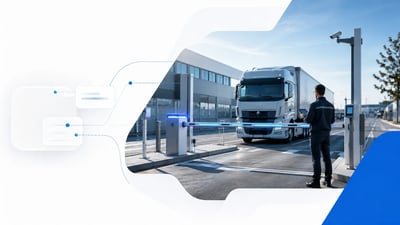
One of the most common challenges for warehouses is handling inbound vehicle traffic efficiently.
Without structured appointment management, warehouses often experience:
- long truck queues;
- dock congestion;
- inefficient labor allocation;
- operational delays.
Scheduling carrier arrivals in advance helps maintain a steady flow of inbound deliveries and improves resource utilization. It also gives warehouse managers the visibility they need to anticipate labor requirements shift by shift, rather than adjusting staffing reactively once trucks are already queuing at the gate.
Large facilities often complement dock scheduling with a Yard Management System (YMS) to manage vehicle movements across the yard.
Dock assignment and utilization
Warehouse docks represent critical operational assets.
Companies should continuously monitor:
- dock occupancy rates;
- unloading capacity;
- labor availability;
- shipment volumes.
Optimizing dock assignments helps maximize throughput while minimizing idle time. Assigning the right dock to the right type of shipment, for instance grouping temperature-sensitive deliveries near dedicated docks, also reduces handling time. This approach aligns with equipment and layout guidance published by material handling associations such as the <a href="https://www.mhi.org/" target="_blank" rel="noopener nofollow">Material Handling Industry (MHI)</a>.
Effective loading dock management is essential for improving operational performance.
Unloading operations
Once a vehicle arrives, warehouse teams must efficiently unload freight while ensuring compliance with operational procedures.
This typically includes:
- visual inspection of pallets and packages;
- damage verification;
- unloading supervision;
- safety compliance checks.
Well-organized unloading processes reduce delays and improve receiving performance.
For outbound shipments, the same principles apply to efficient outbound dock management.
Verification of transport documents
Accurate document control is essential during goods receipt.
Warehouse teams often verify:
- delivery notes;
- consignment notes;
- purchase orders;
- shipment references.
For road transportation operations, documents such as the CMR consignment note remain essential for traceability and compliance.
Digitizing document verification reduces administrative workload and minimizes human error. It also creates a reliable audit trail that can be used to resolve disputes over delivery times, damaged goods, or missing references.
Inventory verification
Companies must ensure that received goods match the original order.
Verification procedures generally include:
- quantity checks;
- product identification;
- <a href="https://www.gs1.org/standards/barcodes" target="_blank" rel="noopener nofollow">barcode scanning</a>;
- quality inspections.
Accurate receiving processes improve inventory reliability and reduce discrepancies.
Storage preparation
Before products are stored, warehouse teams may need to:
- sort goods;
- apply labels;
- assign storage locations;
- prepare inventory records.
Efficient preparation accelerates put-away operations and improves warehouse organization.
Modern warehouse management software helps automate many of these tasks.
Real-time communication
Once goods have been received, information must be shared with relevant stakeholders.
Real-time updates help:
- warehouse teams;
- transportation departments;
- suppliers;
- customers.
Better communication improves visibility across the supply chain and contributes to stronger supply chain optimization.
How can companies optimize dock scheduling?
Several best practices can significantly improve warehouse receiving performance.
Schedule carrier appointments
Appointment scheduling enables warehouses to control delivery flows and allocate resources more effectively.
Rather than managing arrivals on a first-come, first-served basis, carriers reserve dedicated time slots.
This helps:
- reduce waiting times;
- improve dock utilization;
- increase operational predictability.
Balance workloads
Scheduling should take into account:
- shipment volumes;
- unloading complexity;
- available labor resources.
Balancing workloads prevents bottlenecks and improves warehouse productivity. Warehouses that plan for predictable peak periods, such as Monday mornings or the days following a public holiday, are better equipped to allocate extra staff in advance. This proactive approach beats reacting once congestion has already built up.
Create dedicated staging areas
Temporary staging zones facilitate:
- freight inspection;
- labeling;
- sorting;
- inventory preparation.
These areas help streamline the receiving process before goods are stored.
Cross-docking strategies can further accelerate flows by minimizing storage requirements. Learn more about cross-docking.
Automate receiving workflows
Automation reduces manual tasks and accelerates receiving operations.
Examples include:
- barcode scanning;
- digital document management;
- automated notifications;
- real-time status updates.
Together, these automations remove much of the repetitive administrative work from receiving teams, freeing up time for tasks that genuinely require human judgment, such as damage assessment or exception handling.
Which digital tools improve warehouse receiving operations?
Technology plays a key role in modern dock management.
Warehouse Management Systems (WMS)
A Warehouse Management System helps companies manage inventory and warehouse processes.
A WMS provides:
- inventory visibility;
- storage optimization;
- receiving management;
- put-away automation.
It serves as the operational backbone of warehouse activities.
Dedicated WMS software enables warehouses to improve inventory accuracy and operational efficiency.
Dock scheduling software
Dedicated dock scheduling software focuses specifically on appointment management and dock coordination.
These solutions help warehouses:
- schedule carrier appointments;
- manage dock capacity;
- monitor arrival status;
- improve collaboration with carriers.
While a WMS manages the full lifecycle of inventory inside the warehouse, dock scheduling software focuses specifically on the appointment and gate management layer. Many organizations use both in combination, syncing appointment data with inventory receipt records so that stock levels update automatically as trucks are unloaded.
For warehouses handling multiple daily deliveries, specialized dock scheduling software can generate significant efficiency gains.
Businesses that want to synchronize inventory and operational data often integrate ERP and WMS systems.
Why use Shiptidock for dock scheduling?
Shiptidock helps companies digitize and optimize warehouse appointment management.
Online appointment scheduling
Carriers can book available dock slots directly through a dedicated portal.
This eliminates manual coordination and reduces administrative workload.
Improved dock visibility
Warehouse teams gain real-time visibility into:
- planned arrivals;
- dock occupancy;
- carrier schedules;
- operational workload.
Reduced waiting times
Optimized appointment management minimizes truck queues and improves carrier satisfaction. Carriers who can rely on predictable slot times are also less likely to build extra buffer time into their own route planning, which benefits the entire transportation network.
Better operational performance
By balancing inbound flows, companies can improve warehouse productivity and reduce congestion. Warehouses handling several dozen deliveries a day typically notice the difference within the first few weeks of use.
Seamless integration
Shiptidock complements existing transportation and warehouse management systems, creating a more connected logistics ecosystem.
Benefits of digital dock scheduling
Companies that implement dock scheduling software typically achieve:
- lower detention and waiting costs;
- improved dock utilization;
- greater warehouse productivity;
- faster receiving operations;
- improved carrier relationships;
- increased supply chain visibility.
These benefits contribute directly to stronger logistics performance and can be measured using relevant supply chain KPIs, such as dock turnaround time, average waiting time per carrier, and on-time appointment rate.
Tracking these indicators over time also helps warehouse managers justify the investment in dock scheduling software, by showing a measurable reduction in detention costs and an improvement in carrier satisfaction after implementation.
Conclusion
Dock scheduling has become an essential capability for warehouses seeking to improve efficiency, visibility, and operational control.
By organizing carrier appointments, optimizing dock utilization, and digitizing receiving processes, companies can significantly improve inbound logistics performance. The warehouses that treat dock scheduling as a strategic process, rather than a purely administrative task, are the ones that see the strongest gains in throughput and carrier satisfaction. Starting with a clear view of current bottlenecks, whether at the gate, the dock, or the put-away stage, is usually the fastest way forward. This first step helps identify where digital tools will deliver the most value.
With a dedicated solution such as Shiptidock, organizations gain the tools needed to streamline warehouse operations, reduce congestion, and create a more efficient supply chain.
Improve your warehouse dock scheduling with Shiptidock
Discover how Shiptidock helps logistics teams optimize carrier appointments, improve dock utilization, and streamline warehouse receiving operations.