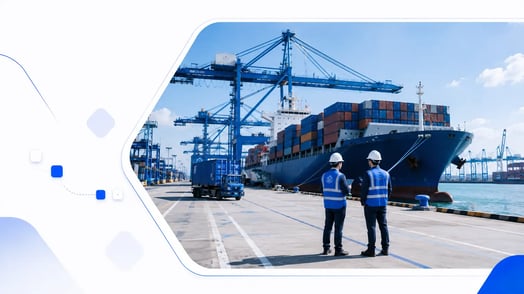
According to UNCTAD, nearly 80% of global merchandise trade by volume is transported by sea. Ocean freight remains the backbone of international commerce, enabling companies to move large volumes of goods efficiently across global markets.
As supply chains become increasingly complex, ocean freight is undergoing significant transformation. Rising transportation costs, stricter environmental regulations, and accelerating digitalization are reshaping how companies manage international shipping operations.
In this guide, we'll explain how ocean freight works, the different cargo and vessel types involved, the key stakeholders in maritime transport, and how businesses can optimize their shipping operations through technology.
What is ocean freight?
Ocean freight refers to the transportation of goods by sea aboard commercial vessels.
Its ability to move large volumes at a relatively low cost makes it the dominant mode of international freight transportation, particularly for long-distance trade.
Ocean freight is used to transport a wide variety of products, ranging from consumer goods and industrial equipment to raw materials and energy products.
As a key component of global freight transport networks, ocean shipping supports international trade across virtually every industry.
What types of cargo are transported by sea?
Commercial vessels transport several categories of cargo.
Containerized cargo
Containerized freight includes manufactured products such as:
- electronics;
- textiles;
- consumer goods;
- industrial products.
These goods are transported in standard:
- 20-foot containers (TEU);
- 40-foot containers (FEU).
A vessel with a capacity of 20,000 TEU can carry approximately 20,000 twenty-foot containers or 10,000 forty-foot containers.
Efficient container transport management is essential to ensuring cost-effective global shipping operations.
Dry bulk cargo
Dry bulk includes unpackaged commodities such as:
- grain;
- coal;
- iron ore;
- minerals.
Liquid bulk cargo
Liquid bulk consists of products transported in tankers, including:
- crude oil;
- refined petroleum products;
- liquefied natural gas (LNG);
- chemicals.
Ro-Ro cargo
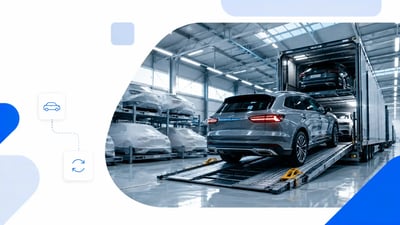
Roll-on/Roll-off (Ro-Ro) vessels transport wheeled cargo such as:
- passenger vehicles;
- trucks;
- trailers;
- construction equipment.
Breakbulk and oversized cargo
Some goods cannot be transported in containers.
These include:
- industrial machinery;
- wind turbine components;
- heavy infrastructure equipment;
- oversized project cargo.
Such shipments are typically handled by specialized vessels designed for heavy-lift and breakbulk operations.
Types of ocean freight vessels
Different vessel types serve different transportation requirements.
Container ships
Container ships transport standardized containers and represent the largest segment of global liner shipping.
Bulk carriers
Bulk carriers transport unpackaged dry commodities such as grain, coal, and minerals.
Tankers
Tankers carry liquid cargo, including petroleum products, LNG, and chemicals.
Ro-Ro vessels
Ro-Ro vessels are specifically designed for wheeled cargo.
Heavy-lift and project cargo vessels
These specialized vessels transport oversized and high-value industrial equipment.
Key stakeholders in ocean freight
Shipping lines
Shipping lines operate vessels and manage global trade routes.
The largest ocean carriers include:
- MSC;
- Maersk;
- CMA CGM;
- COSCO Shipping;
- Hapag-Lloyd.
Together, these companies account for the majority of global container shipping capacity.
Ports and terminals
Ports serve as strategic logistics hubs where cargo is loaded, unloaded, stored, and transferred between transportation modes.
Leading ports include:
- Shanghai;
- Singapore;
- Rotterdam.
Many ports play a critical role in intermodal transportation by connecting maritime, rail, and road networks.
Freight forwarders and logistics providers
Freight forwarders coordinate:
- transportation planning;
- customs procedures;
- documentation;
- shipment visibility.
They play a crucial role in managing international supply chains and often work closely with a Customs Broker to facilitate cross-border trade.
Advantages of ocean freight
Ocean freight offers several significant advantages.
Cost efficiency
Ocean shipping remains one of the most cost-effective transportation methods.
A standard 20-foot container shipment typically costs approximately $2,000–$3,000, significantly less than equivalent air freight.
High capacity
Ocean vessels can transport extremely large volumes of cargo in a single shipment.
Versatility
Virtually every type of cargo can be transported by sea using appropriate equipment and vessel types.
Scalability
Ocean freight can support both small importers and large multinational organizations.
Limitations of ocean freight
Despite its advantages, ocean freight presents several challenges.
Longer transit times
International maritime shipments often require between 10 and 40 days depending on the route.
Port dependency
Port congestion and infrastructure constraints can affect delivery schedules.
Limited flexibility
Ocean freight is less adaptable to last-minute changes than air or road transportation.
Effective logistics scheduling is therefore essential to minimize disruptions and improve reliability.
What is the environmental impact of ocean freight?
Ocean freight accounts for approximately 2–3% of global greenhouse gas emissions.
Although shipping remains one of the most carbon-efficient transportation modes per tonne-kilometre, the sector faces increasing pressure to decarbonize.
Key environmental challenges include:
- CO₂ emissions;
- nitrogen oxide emissions (NOx);
- sulfur oxide emissions (SOx);
- marine pollution;
- underwater noise pollution.
Decarbonization initiatives
The shipping industry is investing heavily in:
- LNG-powered vessels;
- methanol-powered vessels;
- hydrogen and ammonia technologies;
- biofuels;
- wind-assisted propulsion systems;
- operational optimization.
The International Maritime Organization (IMO) aims to achieve net-zero emissions around 2050.
Ocean freight regulations
International shipping is governed by several major legal frameworks.
Hamburg Rules
The Hamburg Rules define carrier liability in cases of cargo loss, damage, or delay.
Organizations facing cargo incidents often implement robust freight claims management processes to reduce financial risks.
Rotterdam Rules
The Rotterdam Rules modernize maritime transport regulations by incorporating multimodal transportation and electronic documentation.
Incoterms used in ocean freight
The most common Incoterms for ocean shipping include:
FOB (Free On Board)
The seller assumes costs and risks until the goods are loaded onto the vessel.
CFR (Cost and Freight)
The seller pays freight costs to the destination port, while risk transfers at shipment.
CIF (Cost, Insurance and Freight)
The seller covers transportation and marine insurance costs.
Essential ocean freight documents
Bill of Lading (B/L)
Proof of shipment and, in some cases, document of title.
Packing List
Details the contents of the shipment.
Sea Waybill
A simplified transport document without title transfer functions.
Charter Party
The contract governing vessel chartering arrangements.
For inland road transport connected to maritime operations, the CMR document is frequently required.
Ocean freight vs air freight vs road freight
Ocean freight is generally the preferred solution when:
- transportation costs are a priority;
- large shipment volumes are involved;
- delivery lead times are flexible.
Air freight is more suitable for urgent or high-value goods, while road freight remains essential for regional distribution and first- and last-mile transportation.
In some cases, companies combine maritime and rail operations through piggyback transportation solutions to improve efficiency and sustainability.
How a TMS improves ocean freight management
Managing ocean freight involves multiple stakeholders, documents, and deadlines.
A Transportation Management System (TMS) helps companies centralize and optimize transportation operations.
Freight procurement
Compare carriers, rates, and transit times from a single platform.
Document automation
Generate and centralize shipping documentation automatically.
Real-time shipment visibility
Track containers and monitor shipment status throughout the transportation process.
Transportation analytics
Monitor transportation costs, carbon emissions, and performance indicators through dedicated dashboards.
Organizations can further enhance efficiency through advanced transportation management system features.
Why use Shiptify for ocean freight management?
Shiptify simplifies ocean freight management through a single collaborative platform.
Companies can:
- centralize freight procurement;
- automate transportation workflows;
- improve shipment visibility;
- monitor logistics performance;
- optimize transportation costs.
The platform also functions as a powerful freight management system for managing international transportation flows.
By connecting all stakeholders involved in international shipping, Shiptify helps businesses build more efficient and resilient supply chains.
Conclusion
Ocean freight remains the foundation of global trade and will continue to play a strategic role in international supply chains.
As the industry evolves through digitalization and decarbonization, companies need greater visibility, stronger operational control, and smarter transportation management tools.
With solutions such as Shiptify, organizations can streamline ocean freight operations, improve performance, and prepare their supply chains for the future.
Optimize your ocean freight operations with Shiptify
Discover how Shiptify helps logistics teams improve shipment visibility, reduce transportation costs, and manage international freight more efficiently.