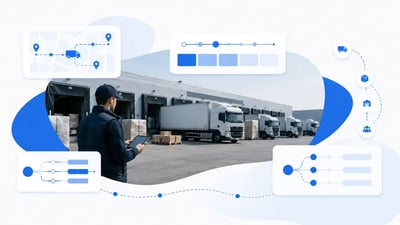
A transportation management system is a digital solution that enables companies to manage all their transport operations. It centralizes the planning, booking and tracking of shipments, while facilitating collaboration with carriers and integrating logistical constraints. There are two distinct types of TMS software: for shippers and for carriers.
A shipper TMS enables a shipper to generate transport orders based on his flows and logistics organization, and then communicate them to carriers. A carrier TMS, on the other hand, is primarily designed to manage, plan and invoice transport orders.
Here are just a few of the common TMS features found in this type of supply chain software:
Order management
The Saas-based TMS for carriers provides companies with real-time visibility of order status. Customers can track the progress of each order, from the moment it is entered, through the various stages of the transport process, right up to delivery. This enables better planning of operations and rapid response to customer requests. In the event of problems or delays on an order, the TMS enables exceptions to be quickly identified and resolved. It also facilitates communication between shippers and carriers, thanks to an automatic notification system.
Transport planning
A TMS solution in Saas mode facilitates optimal planning of rounds, loads and delivery schedules, taking into account constraints such as deadlines, transport capacities, costs, etc. In fact, this type of software uses advanced algorithms to calculate the most efficient routes, taking into account factors such as distance, travel time, traffic restrictions, weather conditions and so on. This enables the company to minimize the distances traveled on its tours and optimize the use of resources.
In this way, shipments can be grouped together to maximize vehicle capacity, without affecting customers. Similarly, delivery times are taken into account, as routes are established accordingly.
The TMS can take into account regulatory constraints, such as weight and size restrictions, safety requirements, customs regulations, etc. It thus helps companies to plan transport in compliance with these regulations, to avoid legal problems and fines.
Load optimization
The TMS offers functions to optimize vehicle loading, maximizing the use of available space and minimizing transport costs. It defines the characteristics of each vehicle, such as its dimensions, loading capacity and specific constraints. Using this information, the system can calculate the available capacity for each load and optimize space utilization. All this, while taking into account the requirements of each product, such as temperature, storage restrictions or handling conditions.
Some TMS software packages offer graphical visualization functionalities that allow vehicle loading to be represented. This helps companies to gain an overview of the load, identify gaps or inconsistencies, and adjust the load if necessary.
Carrier management
The Saas-based software manages the relationship between shippers and carriers, including carrier selection, rate negotiation, transport order issuance, performance monitoring and more. Indeed, the tool manages a database of carriers, including their contact information, capacities, specialties, certifications, etc. It facilitates the selection of carriers according to specific criteria such as availability, rates, geographical coverage, etc. It enables you to compare carriers' offers, evaluate transport costs and negotiate advantageous tariff conditions. This tool helps to reduce transport costs and improve the profitability of operations. It also simplifies rate negotiations with carriers.
It can then generate transport orders for each shipment, containing all the necessary information for the carriers and the customer.
Shipment tracking
Transport and shipper TMS software offer real-time shipment tracking functions , enabling users to know where goods are at all times, and to manage any exceptions or delays. With this functionality, the software sends automatic notifications and alerts to keep users informed of shipment status. This can include updates on delivery schedules, possible delays, exceptions, problems encountered, etc. This enables the customer to react quickly and take appropriate action.
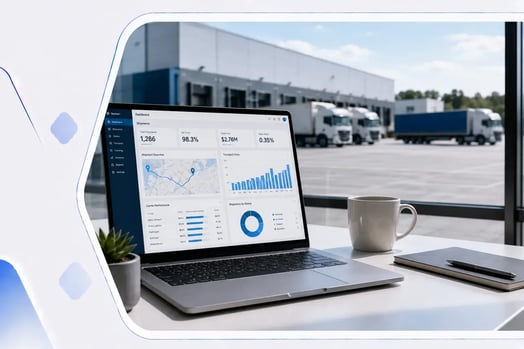
To better track shipments, the software provides a centralized dashboard that displays the status of current shipments. Companies can view key information, such as tracking numbers, route stages, ETAs, delays and more. This gives companies an overview of all current shipments, enabling them to manage them efficiently.
Warehouse Management System (WMS)
Some TMS software packages offer additional functions for managing logistics warehouses. For example, inventory tracking functions, recording information on stored goods. This makes it possible to know current stock levels, manage stock movements and forecast replenishment requirements.
In addition, the WMS solution can help the company optimize the location of goods and flows within the warehouse. Using optimization algorithms, it determines the best locations for each type of merchandise, taking into account characteristics, volumes, frequency of use and so on. This reduces travel times and improves the efficiency of warehouse operations. It also facilitates the management of incoming and outgoing goods. It can scan barcodes, generate labels, track stored quantities, record in/out dates, manage associated documents, and more.
Although the TMS is not a tool initially designed to manage warehouses, it can be integrated with warehouse management systems (WMS ) to enable better synchronization between the two, and thus fully manage the supply chain.
Invoicing and payment
A TMS solution in Saas mode enables you to generate invoices, track transport costs, manage payments to carriers and perform financial analyses associated with transport operations. It uses data stored in the system, such as shipment details, agreed rates, contractual terms and conditions, etc.
The solution simplifies the entire invoicing process. The TMS also records payments received from customers. It tracks amounts paid, payment dates, payment methods used, and so on. This makes it easier for a company to manage accounts receivable, track pending payments and generate financial reports.
Analysis and reporting
Transportation management system software provide analysis and reporting tools to assess performance, track key performance indicators (KPIs), identify optimization opportunities and make informed decisions. This is achieved primarily through customizable dashboards that visualize KPIs and data relevant to each user. These dashboards offer an overview of transport operations, key statistics and graphs to facilitate visual analysis of performance. Companies can therefore analyze how their supply chain is performing.
Some TMS offer advanced analysis functionalities that extract more in-depth information from transport data. These advanced analyses help to identify trends, understand influencing factors and make decisions based on concrete data - a real advantage for a company.
These functionalities may vary according to the specific shipper or carrier TMS software used and the company's needs, but they generally represent the main features of a transport management system. TMS solutions are therefore essential to the smooth running of the supply chain. They enable companies to better manage and control their logistics.
With Shiptify, opt for a 100% digital, Saas and complete TMS. With our control tower TMS, you'll be able to optimize your expenses, manage your orders, forecast your transport plans, manage disputes, and use partner technologies. You'll also be able to request quotations online, and book your carrier. You'll also be able to track your shipments in real time, from quotation request to dock arrival.