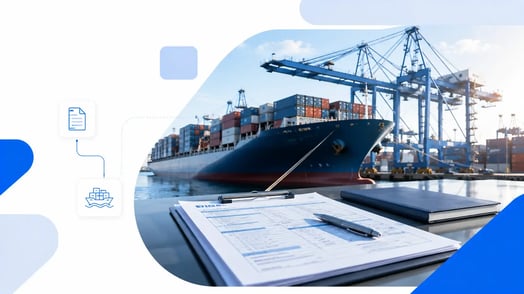
The Bill of Lading (B/L) is one of the most important documents in international shipping. Whether you are an importer, exporter, freight forwarder, or logistics manager, understanding how a Bill of Lading works is essential to ensuring smooth maritime operations and avoiding costly delays.
More than just a shipping document, the Bill of Lading serves as a contract of carriage, a receipt of goods, and in some cases, a document of title.
In this guide, we'll explain what a Bill of Lading is, why it matters, the different types available, and how modern Transportation Management Systems (TMS) help companies manage B/L documentation more efficiently.
What is a Bill of Lading?
A Bill of Lading (B/L) is a legal document issued by a carrier to acknowledge receipt of goods for shipment.
In maritime transport, it acts as:
- A contract of carriage between the shipper and the carrier
- A receipt confirming cargo has been received
- A document of title, allowing ownership of the goods to be transferred under specific conditions
The Bill of Lading contains essential information about the shipment, including the parties involved, the cargo description, the ports of loading and discharge, and the agreed transportation conditions.
Why is the Bill of Lading important in international trade?
The Bill of Lading plays a critical role in international shipping operations.
Cargo traceability
The B/L provides a complete record of the shipment journey, from origin to destination, improving visibility across the supply chain.
Transaction security
It formalizes the transportation agreement and protects all parties by documenting the agreed shipping terms.
Customs compliance
Customs authorities use Bill of Lading information to verify shipments and facilitate import and export procedures. Working closely with a customs broker often helps companies streamline these processes.
Liability management
In the event of cargo damage, loss, or delays, the B/L helps determine the responsibilities of each party involved. Clear documentation is also a company's best defense in freight claims management.
Transfer of ownership
Certain types of Bills of Lading allow ownership of goods to be transferred while cargo is still in transit.
Regulatory compliance
The document ensures compliance with international maritime transport regulations and industry standards, including the frameworks established by the International Maritime Organization (IMO).
Who issues a Bill of Lading?
The Bill of Lading is typically issued by the ocean carrier once the cargo has been received and loaded onto the vessel.
The document is then provided to the shipper as evidence that the carrier has taken responsibility for transporting the goods to the agreed destination.
Traditionally, several original copies are issued:
- One copy for the carrier
- One copy for the shipper
- One or more negotiable originals used to claim the cargo at destination
What information is included in a Bill of Lading?
A Bill of Lading must contain accurate and complete information to avoid delays, disputes, and additional costs.
Transportation information
The document generally includes:
- Vessel name
- Voyage number
- Port of loading
- Port of discharge
- Bill of Lading number
- Shipping references
Cargo information
The cargo section specifies:
- Type of goods
- Quantity shipped
- Weight and volume
- Packaging details
- Dangerous goods classification when applicable
- Container type and container numbers
Companies managing large volumes of container transport operations must ensure that all shipment data remains accurate throughout the transportation process.
Parties involved
The Bill of Lading identifies:
- The shipper
- The consignee
- The carrier
- The notify party
- Freight payment terms
How is a Bill of Lading created?
The carrier first collects all shipment information from the shipper and verifies its accuracy.
The Bill of Lading is then prepared and issued with all relevant transportation details.
Once validated, the document is distributed to the appropriate parties and becomes part of the shipment documentation.
Any errors or omissions may lead to:
- Customs delays
- Cargo release issues
- Additional costs
- Contractual disputes
This is why many companies rely on freight management systems and TMS software to automate documentation workflows and reduce manual errors.
What are the different types of Bill of Lading?
Different shipping scenarios require different types of Bills of Lading, mainly distinguished by whether they are negotiable, meaning ownership of the goods can be transferred by endorsement.
| Type | Negotiable? | Typical use case |
|---|---|---|
| Straight Bill of Lading | No | Direct shipments to a named, trusted consignee |
| Order Bill of Lading | Yes | International trade with letters of credit |
| Bearer Bill of Lading | Yes | Rare; maximum transfer flexibility |
| Switch Bill of Lading | Varies | Confidential cargo resale in transit |
| House / Master Bill of Lading | Varies | Consolidated shipments via freight forwarders |
| Electronic Bill of Lading (eBOL) | Varies | Digitized, paperless documentation |
Straight Bill of Lading
A Straight Bill of Lading is non-negotiable. It names a specific consignee to whom the carrier must deliver the goods, and it cannot be transferred to another party by endorsement. This type is typically used when payment has already been made or when goods are shipped between trusted parties.
Order Bill of Lading (To Order)
An Order Bill of Lading, often issued "to the order of" a named party, is negotiable: the right to claim the goods can be transferred to another party through endorsement while the cargo is still in transit. It is frequently used in international trade transactions involving documentary credits and multiple ownership transfers.
Bearer Bill of Lading
A Bearer Bill of Lading is a negotiable document that does not name a specific consignee. Ownership of the goods can be transferred simply by handing over the original document. Because of the security and fraud risks associated with this high negotiability, bearer bills are rarely used in modern trade.
Switch Bill of Lading
A Switch Bill of Lading is issued to replace the original Bill of Lading while the cargo is still in transit.
This solution is commonly used when:
- Protecting commercial confidentiality
- Hiding supplier information from the buyer
- Facilitating cargo resale during transportation
The original Bill of Lading must typically be surrendered before a Switch B/L can be issued. Processing times and costs vary depending on the carrier, and it is important to note that some countries restrict or prohibit the use of Switch Bills of Lading.
House Bill of Lading vs Master Bill of Lading
When a freight forwarder consolidates cargo from multiple shippers into a single container, two distinct documents come into play. The Master Bill of Lading (MBL) is issued by the ocean carrier to the freight forwarder and covers the entire container. The House Bill of Lading (HBL) is issued by the freight forwarder to each individual shipper and covers only their specific cargo within that consolidated shipment.
Electronic Bill of Lading (eBOL)
The Electronic Bill of Lading digitizes the traditional paper process, allowing carriers and shippers to issue, transfer, and surrender B/Ls online. Despite its clear efficiency benefits, adoption remains gradual: according to Investopedia, only 11% of Bills of Lading issued in 2025 were electronic, which continues to create friction and delays in an otherwise digitized supply chain.
The Bill of Lading and Letters of Credit
The Bill of Lading often plays a central role in transactions secured by a Letter of Credit (L/C).
Banks use the document as proof that goods have been shipped according to the agreed contractual terms.
Because the Letter of Credit specifies strict documentary requirements, any discrepancy in the Bill of Lading may delay or prevent payment. For this reason, accuracy is critical when preparing shipping documentation for documentary credit transactions.
Key maritime shipping terms to know
Charterer
A charterer is an individual or company that leases a vessel for a specific voyage or period of time.
Incoterms®
Incoterms® are internationally recognized trade rules published by the International Chamber of Commerce (ICC).
They define the responsibilities of buyers and sellers throughout international transactions.
Ocean freight
Sea freight refers to the transportation of goods by sea between ports worldwide.
Transshipment
Transshipment occurs when cargo is transferred from one vessel to another during its journey to the final destination.
This process is often used to optimize shipping routes and improve network efficiency, particularly within complex intermodal transportation networks.
How a TMS improves Bill of Lading management
As shipping operations become more complex, managing Bills of Lading manually can create significant administrative challenges.
Modern Transportation Management Systems help companies digitize and streamline document management.
Improved traceability
A TMS centralizes shipment documentation and provides real-time access to transportation information.
Better coordination
By sharing documentation across stakeholders, companies improve communication and reduce operational errors.
Greater visibility
Transportation teams gain full visibility into shipment status and associated documentation throughout the transportation process.
Organizations seeking to improve transportation efficiency often leverage advanced transportation management system features to automate workflows and enhance collaboration.
Why use Shiptify for Bill of Lading management?
Shiptify simplifies transportation document management through its integrated Doc Center.
Centralized document management
All transportation documents are stored in a single location, including:
- Bills of Lading
- CMRs
- Proofs of delivery
- Customs documentation
- Carrier contracts
Faster document retrieval
Advanced search and filtering capabilities allow teams to quickly access relevant documents and prepare audits more efficiently.
Long-term compliance
Documents can be retained for up to ten years, supporting regulatory compliance and long-term traceability requirements.
Improved operational control
Automatic categorization, document validity tracking, and centralized access help logistics teams maintain complete control over transportation documentation.
Conclusion
The Bill of Lading is much more than a shipping document. It is a cornerstone of international trade, providing legal protection, shipment visibility, cargo ownership management, and regulatory compliance.
As global supply chains become increasingly complex, digitizing Bill of Lading management through a Transportation Management System such as Shiptify helps companies improve efficiency, reduce administrative workload, and gain greater control over their shipping operations.