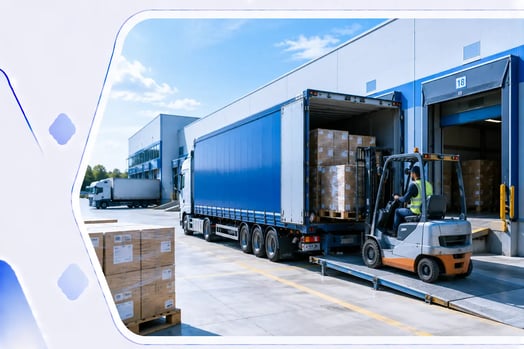
Organizing truck loading and unloading operations is a critical component of efficient supply chain management. Poorly managed dock activities can lead to delays, safety incidents, damaged goods, increased transportation costs, and lower warehouse productivity.
To ensure safe and efficient operations, companies must implement structured loading procedures, robust safety protocols, and effective dock scheduling practices.
In this guide, we explore the key steps involved in truck loading and unloading, the regulations and safety measures to follow, and the technologies that can help optimize dock operations.
The truck loading process
Loading a truck safely and efficiently requires careful preparation and strict adherence to operational procedures.
Vehicle inspection and verification
Before loading begins, the vehicle must be inspected to ensure it is suitable for the planned shipment.
- Vehicle dimensions and load capacity
- Mechanical condition
- Tires and suspension
- Lighting and safety equipment
- Trailer condition
- Compliance with applicable transportation regulations
Ensuring that the vehicle is in good condition reduces operational risks and helps prevent incidents during transport.
Preparing the cargo
Proper cargo preparation is essential for safe transportation.
Goods should be:
- Identified and labeled correctly
- Grouped according to product type
- Packaged using appropriate materials
- Protected against impacts, movement, moisture, or contamination
Particular attention should be paid to sensitive products such as hazardous materials, liquids, fragile goods, or oversized freight.
Load distribution and weight balance
Correct weight distribution is essential for vehicle stability and road safety.
Best practices include:
- Placing heavier items at the bottom of the load
- Positioning heavy goods along the vehicle's centerline
- Distributing weight evenly across the trailer floor
- Avoiding concentration of weight in a single area
Poor load distribution can negatively affect braking, steering, and vehicle stability.
Securing the load
Once loaded, the cargo must be properly secured to prevent movement during transport.
Several securing methods may be used:
- Direct lashing using straps or chains
- Blocking and bracing
- Floor anchoring
- Container locking systems
- Anti-slip materials
The appropriate securing technique depends on the nature of the cargo and the transport equipment used.
The truck unloading process
Unloading operations require the same level of planning and safety as loading activities.
Preparing the unloading area
Before unloading starts, warehouse teams should ensure that:
- Adequate space is available
- Dock equipment is operational
- Forklifts and pallet trucks are ready
- Safety zones are clearly marked
- Traffic flows are controlled
Proper preparation minimizes operational disruptions and improves productivity.
Safe unloading procedures
Cargo should be unloaded carefully and according to established procedures.
Key steps include:
- Removing securing equipment safely
- Following the unloading sequence
- Handling goods using appropriate equipment
- Avoiding sudden movements that could destabilize the load
Particular care should be taken when handling fragile or hazardous products.
Final inspection and delivery confirmation
Once unloading is complete, a final inspection should be performed.
This includes:
- Checking for visible damage
- Verifying quantities received
- Recording any discrepancies
- Completing delivery documentation
This final verification step helps prevent disputes and ensures shipment accuracy.
Why loading dock safety is essential
Loading docks are among the highest-risk areas within warehouses and distribution centers.
Without proper safety measures, companies face increased risks of:
- Workplace accidents
- Vehicle collisions
- Product damage
- Operational disruptions
- Regulatory non-compliance
Implementing a structured dock safety program is therefore essential.
Developing an effective loading and unloading safety protocol
A loading and unloading safety protocol establishes clear responsibilities between the carrier and the receiving facility.
The protocol should include:
- Site access instructions
- Traffic circulation rules
- Dock assignment procedures
- Emergency response procedures
- Safety requirements
- Contact information for responsible personnel
For carriers, the protocol should also specify:
- Vehicle characteristics
- Cargo specifications
- Packaging requirements
- Special handling instructions
- Dangerous goods procedures where applicable
A clear protocol improves communication and reduces operational risks.
Training and protective equipment
Warehouse teams should receive regular training covering:
- Safe loading and unloading practices
- Equipment operation
- Manual handling techniques
- Risk assessment
- Emergency procedures
Appropriate Personal Protective Equipment (PPE) should also be mandatory.
This may include:
- Safety shoes
- High-visibility clothing
- Protective gloves
- Safety helmets
- Eye protection where required
Dedicated loading and unloading zones
Clearly defined dock areas improve both safety and efficiency.
Best practices include:
- Clear floor markings
- Speed limits for vehicles
- Restricted access zones
- Pedestrian walkways
- Visual signage
These measures help separate people, vehicles, and equipment while improving traffic flow.
Conducting regular inspections
Loading and unloading operations should be monitored continuously.
Regular inspections should verify:
- Vehicle condition
- Cargo stability
- Dock equipment status
- Compliance with safety procedures
Early detection of potential issues helps prevent accidents and costly disruptions.
How to optimize loading dock operations
Beyond safety, companies should focus on maximizing operational efficiency.
Improve dock infrastructure
Modern dock equipment can significantly improve productivity.
Examples include:
- Adjustable dock levelers
- Dock shelters and seals
- Safety barriers
- Vehicle restraint systems
- Digital signage
These investments help create safer and more efficient loading environments.
Monitor dock performance
Tracking dock KPIs provides valuable insights into operational performance.
Common metrics include:
- Truck turnaround time
- On-time arrivals
- Dock utilization rate
- Loading and unloading duration
- Carrier waiting times
These indicators support continuous improvement initiatives and can be integrated into broader supply chain KPIs.
Improve planning and coordination
One of the most common causes of dock congestion is poor scheduling.
Coordinating arrivals and departures with carriers helps:
- Reduce waiting times
- Balance workloads
- Improve resource allocation
- Increase dock throughput
Effective appointment scheduling is therefore a key element of dock optimization.
Using technology to improve dock management
Digital tools have become essential for managing warehouse operations efficiently.
Solutions such as dock scheduling software enable companies to:
- Schedule appointments online
- Coordinate with carriers in real time
- Manage dock availability
- Improve visibility into warehouse activity
- Reduce congestion
These technologies create a more collaborative and efficient environment for all stakeholders.
Why use Shiptidock?
Shiptidock is a dock scheduling solution designed to simplify warehouse operations and improve visibility across inbound and outbound flows.
Key capabilities include:
- Online appointment scheduling
- Real-time dock activity monitoring
- Centralized planning of loading and unloading operations
- Improved communication with carriers
- Enhanced visibility across warehouse operations
By reducing congestion, improving planning accuracy, and streamlining coordination between warehouse teams and carriers, Shiptidock helps companies increase efficiency while maintaining high safety standards.
Conclusion
Efficient truck loading and unloading operations are essential for maintaining supply chain performance, warehouse productivity, and workplace safety.
By implementing structured procedures, robust safety protocols, regular inspections, and modern scheduling technologies, companies can significantly improve dock performance while reducing operational risks.
Solutions such as Shiptidock provide the visibility and coordination needed to optimize dock operations, reduce waiting times, and create safer, more efficient warehouse environments.