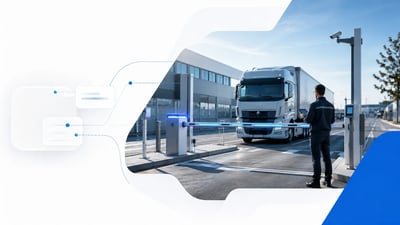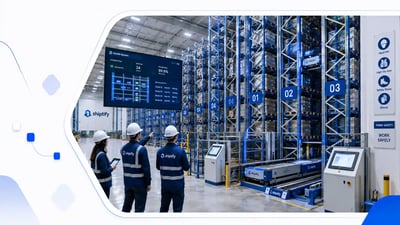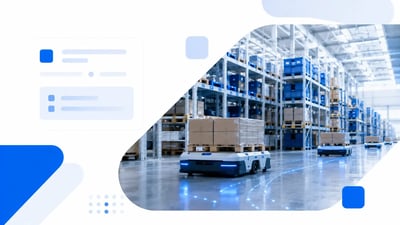
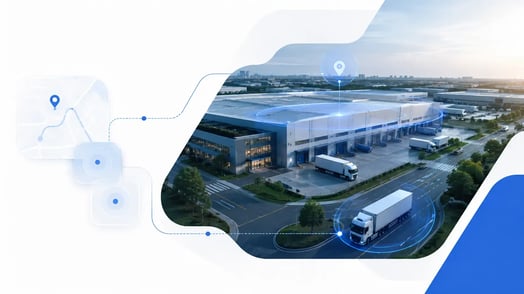
A geofence is a virtual geographic boundary created in software around a real-world location. When a tracked asset such as a truck, trailer, forklift, container, or mobile device enters or leaves that predefined area, the system automatically triggers an event. That event may generate an alert, launch a workflow, update shipment statuses, or record operational data without requiring manual intervention.
Today, geofencing is one of the most widely used location technologies in logistics and supply chain management. It powers automatic truck check-ins, real-time ETA notifications, proof of delivery, cold chain compliance, yard management, and asset protection. By automating location-based events, geofencing helps organizations improve visibility, reduce manual tasks, and streamline operations.
This guide explains how geofencing works, the technologies behind it, its main logistics applications, and the best practices for implementing geofencing across modern supply chains.
What is a geofence?
A geofence is a software-defined perimeter built from geographic coordinates. Unlike a physical fence, it exists only within a digital mapping platform.
Whenever a tracked asset reports its location, the system compares its coordinates with every active geofence associated with that asset. If the asset crosses the boundary, the platform immediately generates an entry or exit event.
Depending on how the system is configured, these events can automatically:
- update shipment statuses;
- notify customers;
- assign dock doors;
- calculate dwell time;
- launch warehouse workflows;
- alert fleet managers.
Geofencing has become an essential capability for companies seeking real-time supply chain visibility and greater automation across logistics operations.
Organizations often integrate geofencing with Transportation Management Systems (TMS) and real-time transportation visibility platforms to eliminate manual updates and improve operational accuracy.
Types of geofences
Different logistics scenarios require different geofence geometries.
Circular geofence
A circular geofence is defined using:
- a central GPS coordinate;
- a radius.
It is the simplest configuration and is commonly used for:
- customer delivery addresses;
- warehouses;
- distribution centers;
- depots;
- service territories.
For GPS-based applications, a radius between 50 and 100 meters generally provides the best balance between accuracy and reliability.
Polygon geofence
A polygon geofence follows the exact outline of a facility using multiple coordinate points.
This format is ideal for locations with irregular shapes, including:
- logistics parks;
- ports;
- warehouses;
- manufacturing sites;
- large distribution centers.
Because the boundary closely matches the physical site, polygon geofences generate fewer false alerts than circular geofences.
Polygon geofences are particularly useful when integrated with Yard Management Systems (YMS) to automate truck arrivals and departures.
Corridor geofence
A corridor geofence creates a virtual buffer around a planned route.
It is primarily used to monitor:
- planned transportation routes;
- hazardous goods movements;
- high-value shipments;
- route compliance.
If a vehicle leaves the approved corridor, the system immediately alerts dispatchers.
This functionality is especially valuable when combined with route optimization and shipment tracking solutions.
Dynamic geofence
Unlike static boundaries, dynamic geofences move with another asset.
Examples include:
- safety zones around autonomous vehicles;
- exclusion zones surrounding heavy machinery;
- proximity monitoring between warehouse equipment.
Although less common, dynamic geofencing is becoming increasingly important in automated warehouses and industrial environments.
How geofencing works
Every geofencing solution consists of three main layers:
- Position reporting
- Boundary comparison
- Event processing
Position reporting
The tracked asset continuously reports its location using one or more positioning technologies.
Common technologies include:
- GPS
- Cellular triangulation
- Wi-Fi positioning
- Bluetooth Low Energy (BLE)
- Ultra-Wideband (UWB)
- RFID
Each technology offers different levels of accuracy depending on the operating environment.
For outdoor transportation, GPS remains the industry standard, typically delivering positioning accuracy between 3 and 5 meters under ideal conditions.
Indoor environments, however, generally require BLE, Wi-Fi, UWB, or RFID because GPS signals cannot reliably penetrate buildings.
Boundary comparison
Each time a new position is received, the platform compares the asset's location against every active geofence.
The system determines whether the asset:
- remains inside the boundary;
- remains outside;
- has entered the area;
- has exited the area.
Although these calculations are computationally simple, enterprise platforms must perform millions of comparisons every day while filtering out GPS drift and temporary positioning errors.
Event processing
Once a boundary crossing is detected, the platform generates an event containing:
- asset identification;
- geofence identification;
- event type (entry or exit);
- timestamp;
- GPS coordinates.
This event is then transmitted to downstream applications using:
- webhooks;
- APIs;
- direct database integrations;
- push notifications.
Event-driven integration enables organizations to automate logistics workflows without requiring manual input from drivers or warehouse operators.
Geofencing in logistics and supply chain management
Geofencing has become a core capability across modern logistics operations. By automatically triggering events based on the location of vehicles, trailers, equipment, or shipments, it improves operational visibility while reducing manual processes.
Its applications span the entire supply chain, from transportation and yard operations to last-mile delivery and cold chain monitoring.
Fleet management and vehicle tracking
Fleet managers use geofencing to define authorized operating zones for vehicles and automatically detect exceptions.
Typical use cases include:
- unauthorized vehicle departures;
- entry into restricted areas;
- customer arrival notifications;
- route compliance monitoring;
- operating hours enforcement.
Customer site arrival
One of the most common logistics applications is automatic arrival detection.
When a truck enters the geofence surrounding a customer site:
- the Transportation Management System (TMS) automatically updates the shipment status;
- the arrival timestamp is recorded;
- dispatch teams receive real-time visibility;
- customers can be notified automatically.
This eliminates manual driver check-in calls while creating a reliable audit trail for every delivery.
Route compliance
For hazardous goods, pharmaceutical products, or high-value shipments, corridor geofences monitor whether vehicles remain on approved routes.
If a truck deviates outside the authorized corridor, the system immediately alerts dispatchers, allowing them to investigate before the deviation becomes a compliance or security issue.
Combined with real-time transportation visibility, geofencing significantly improves shipment monitoring.
Operating hours monitoring
Geofences can also detect unusual vehicle activity.
Examples include:
- trucks leaving depots outside authorized hours;
- vehicles entering restricted zones;
- excessive dwell time at customer locations.
These automated alerts help fleet managers identify operational issues without continuously monitoring vehicles manually.
Yard management
Yard management is one of the highest-value applications of geofencing.
Instead of requiring drivers to report their arrival manually, geofences automatically detect when trucks enter the facility.
Automatic truck check-in
When a truck crosses the yard boundary:
- the Yard Management System (YMS) creates a check-in record;
- arrival time is automatically captured;
- shipment references are linked;
- trailer identification is recorded.
This eliminates manual gatehouse procedures while reducing waiting times.
Dock door assignment
Once the vehicle has entered the facility, the YMS can automatically assign the most appropriate dock door based on:
- appointment schedules;
- shipment type;
- door availability;
- warehouse priorities.
Integration with loading dock management software further streamlines inbound and outbound operations.
Dwell time tracking
Because geofence entry and exit timestamps are automatically recorded, organizations gain real-time visibility into trailer dwell times.
This enables them to:
- identify operational bottlenecks;
- improve carrier performance;
- reduce detention costs;
- optimize yard utilization.
Automatic departure confirmation
When the vehicle exits the facility, the geofence automatically:
- closes the yard visit;
- records departure time;
- updates the TMS;
- completes shipment milestones.
These automated timestamps create accurate performance metrics without requiring manual data entry.
Last-mile delivery
Geofencing has become an essential component of modern last-mile logistics.
Customer arrival notifications
A geofence around the delivery address automatically triggers messages such as:
"Your driver is arriving soon."
Customers receive real-time updates without drivers needing to make phone calls.
This improves customer satisfaction while reducing failed deliveries.
Dynamic ETA updates
As drivers complete each stop, geofence events continuously refine estimated arrival times for the remaining deliveries.
Rather than providing a broad delivery window, the system gradually narrows the ETA as the route progresses.
These updates are commonly integrated with last-mile delivery platforms.
Proof of delivery
Geofence exit events provide an automatic timestamp confirming that the driver has completed the stop.
When combined with:
- electronic signatures;
- delivery photos;
- barcode scans;
they create a complete digital proof-of-delivery record.
Failed delivery detection
Geofencing also helps identify unsuccessful delivery attempts.
For example:
- if the vehicle approaches the destination but never enters the delivery geofence;
- or if it remains inside only briefly without completing the expected workflow,
the system can automatically flag the delivery for review.
Cold chain monitoring
In temperature-controlled logistics, geofencing adds an extra layer of visibility by combining location data with temperature monitoring. This enables logistics providers to verify not only where a shipment is located, but also whether it has remained within compliant conditions throughout its journey.
Authorized location monitoring
Pharmaceutical, food, and healthcare shipments should only stop at approved facilities.
Geofences can be configured around:
- certified warehouses;
- approved distribution centers;
- customer delivery sites;
- cross-docking facilities.
If a refrigerated vehicle stops outside an authorized location, the system immediately generates an alert, helping operators identify potential breaks in the cold chain.
Loading dock compliance
Geofencing can also validate that products are loaded or unloaded only at approved facilities.
When combined with temperature sensors, the system automatically records:
- arrival at the loading dock;
- loading timestamp;
- compliant storage temperature;
- departure time.
This creates an automated audit trail that supports regulatory compliance and quality assurance.
Cross-border traceability
International cold chain shipments often pass through multiple countries.
Geofence events at border crossings automatically generate timestamped records that support:
- customs documentation;
- product traceability;
- chain-of-custody reporting.
For organizations managing temperature-sensitive goods, combining geofencing with real-time transportation visibility significantly improves shipment monitoring and regulatory compliance.
Construction equipment and asset tracking
Although widely associated with transportation, geofencing is also used to monitor valuable mobile assets.
Examples include:
- construction machinery;
- trailers;
- generators;
- compressors;
- forklifts;
- containers.
Theft prevention
A geofence is created around each authorized worksite.
If equipment leaves the designated area outside approved operating hours, the platform immediately alerts fleet managers or security teams.
This simple capability has become one of the most effective ways to reduce equipment theft.
Equipment utilization
Geofence data also helps organizations measure asset utilization.
By comparing the time equipment spends:
- inside the job site;
- operating;
- idle;
Companies gain valuable insights into fleet performance and resource allocation.
Geofence accuracy and limitations
Although geofencing is highly reliable, its performance depends on the positioning technology being used.
GPS accuracy
Under ideal outdoor conditions, GPS typically provides positioning accuracy between 3 and 5 meters.
This level of precision is more than sufficient for most logistics applications, including:
- customer deliveries;
- depot arrivals;
- yard management;
- fleet tracking.
Urban environments
In dense urban areas, GPS accuracy may decrease to 10–50 meters due to:
- tall buildings;
- signal reflections;
- reduced satellite visibility.
For this reason, circular geofences should generally have a minimum radius of 50 to 100 meters to reduce false entry and exit events.
Indoor positioning
GPS cannot reliably operate indoors.
Warehouses therefore rely on technologies such as:
- Wi-Fi positioning;
- Bluetooth Low Energy (BLE);
- Ultra-Wideband (UWB);
- RFID.
These technologies enable much higher positioning accuracy for indoor logistics operations, including warehouse management and asset tracking.
GPS drift
Vehicles parked close to a geofence boundary may occasionally generate false entry or exit events because of natural GPS fluctuations.
This issue can largely be minimized by:
- increasing the geofence radius;
- applying buffer zones;
- filtering short-duration crossings.
Battery life considerations
The frequency with which tracking devices report their location directly affects battery life.
Higher reporting frequencies provide:
- faster event detection;
- more accurate movement histories.
However, they also consume more power.
For battery-powered asset trackers, organizations must balance responsiveness with battery autonomy.
Privacy and GDPR compliance
When geofencing is used to monitor employees or drivers, the collected location data is considered personal data under the General Data Protection Regulation (GDPR).
Organizations should therefore ensure:
- a lawful basis for processing;
- transparency regarding employee monitoring;
- appropriate data retention policies;
- secure storage of location data.
Including geofencing policies in employment contracts and driver handbooks helps ensure compliance while maintaining trust with employees.
Geofencing technologies and integrations
Modern geofencing platforms are designed to integrate seamlessly with enterprise logistics systems.
API integrations
Developers can build custom geofencing applications using APIs provided by platforms such as:
- Google Maps Platform;
- HERE Technologies;
- Radar.
These APIs allow applications to:
- create geofences;
- receive location updates;
- generate entry and exit events;
- trigger automated workflows.
Event-driven architecture
Most enterprise logistics platforms use webhooks to deliver geofence events.
For example:
- a truck enters a warehouse;
- the geofence generates an entry event;
- the event is sent to the Transportation Management System (TMS);
- the TMS automatically updates the shipment status;
- the Yard Management System (YMS) assigns a dock door.
This event-driven architecture eliminates manual status updates while significantly improving operational responsiveness.
IoT integration
Many modern telematics devices already include native geofencing capabilities.
Trailer telematics providers can automatically forward geofence events to:
- TMS platforms;
- WMS solutions;
- fleet management software.
This removes the need for separate location-processing platforms while simplifying system architecture.
Real-time event processing
Operational geofencing requires near real-time event delivery.
For logistics workflows such as:
- automatic truck check-in;
- dock assignment;
- delivery notifications;
event latency should typically remain between 5 and 30 seconds.
Longer processing delays reduce the operational value of geofencing and may disrupt downstream logistics workflows.
Final thoughts
Geofencing has become one of the foundational technologies powering modern logistics operations. By transforming location data into automated business events, it enables organizations to improve visibility, eliminate manual processes, and make faster operational decisions across the supply chain.
Whether used for fleet management, yard operations, last-mile delivery, cold chain monitoring, or asset tracking, geofencing provides accurate, real-time information that enhances efficiency while reducing delays and administrative work. When integrated with transportation and warehouse systems, it becomes a powerful automation tool that improves coordination between carriers, warehouses, customers, and logistics teams.
As supply chains become increasingly connected, the value of geofencing will continue to grow. Combined with technologies such as Transportation Management Systems (TMS), real-time transportation visibility, Yard Management Systems (YMS), and shipment tracking, geofencing helps organizations build smarter, more responsive, and more efficient logistics operations.