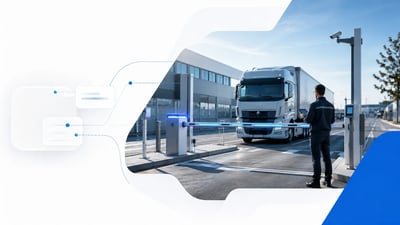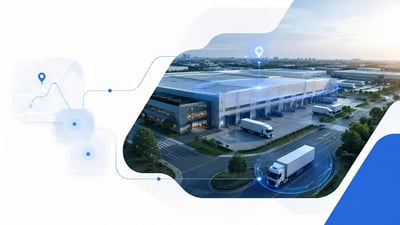

Warehouse docks are one of the most critical points in the supply chain.
When inbound and outbound flows are poorly coordinated, warehouses quickly experience congestion, carrier delays, labor inefficiencies, and increased transportation costs. As supply chains become more complex and customer expectations continue to rise, traditional scheduling methods based on phone calls, emails, and spreadsheets are no longer sufficient.
This is why more companies are turning to dock scheduling software to improve visibility, optimize warehouse operations, and streamline collaboration with carriers.
In this article, we explore how digital dock management helps organizations improve efficiency and why solutions such as Shiptidock are becoming essential for modern warehouse operations.
Why dock management matters
Warehouse docks are the connection point between transportation and warehouse operations.
Every inbound delivery and outbound shipment passes through a dock door. When scheduling is poorly managed, warehouses face several challenges:
- Long driver waiting times
- Congestion at dock doors
- Poor labor utilization
- Delayed shipments
- Reduced warehouse productivity
- Increased transportation costs
Even a small disruption at the dock can impact the entire supply chain.
Efficient dock management helps organizations create smoother operations, improve carrier relationships, and increase warehouse throughput.
For facilities managing shipping activities, effective coordination between inbound and outbound dock management processes is essential.
The limitations of manual dock scheduling
Many warehouses still rely on phone calls, emails, spreadsheets, or shared calendars to organize appointments.
While these methods may work for low shipment volumes, they become increasingly difficult to manage as operations grow.
Common challenges include:
- Multiple emails exchanged for a single appointment
- Limited visibility into dock availability
- Scheduling conflicts
- Last-minute changes
- Poor communication between warehouse teams and carriers
Without a centralized scheduling system, planners often spend significant time coordinating appointments instead of focusing on higher-value activities.
Organizations operating modern warehouses increasingly complement manual planning tools with warehouse management software to improve operational visibility.
The benefits of online dock appointment scheduling
Online dock scheduling transforms how warehouses manage inbound and outbound flows.
Instead of contacting warehouse teams manually, carriers can directly reserve available time slots through a dedicated portal.
This approach provides several advantages.
Reduced administrative workload
Automated scheduling eliminates countless emails and phone calls.
Warehouse teams no longer need to manually coordinate every appointment request.
Better workload balancing
Appointments can be distributed evenly throughout the day, reducing peaks and bottlenecks.
This allows warehouses to make better use of labor and dock resources.
Shorter driver waiting times
By assigning predefined time slots, carriers arrive according to a structured schedule.
This reduces congestion at warehouse entrances and minimizes detention and waiting costs.
Improved carrier relationships
Carriers benefit from greater visibility and a simpler booking process.
This creates a more collaborative relationship between transportation providers and warehouse operators.
Solutions dedicated to dock appointment scheduling help formalize these processes while improving operational efficiency.
Collaborative dock scheduling
One of the biggest advantages of modern dock scheduling software is real-time collaboration.
Every stakeholder involved in warehouse operations has access to the same information.
This includes:
- Warehouse teams
- Transportation planners
- Carriers
- Site managers
Any change made to the schedule is immediately visible across the platform.
This real-time visibility improves coordination and enables faster decision-making when disruptions occur.
Instead of reacting to problems after they happen, teams can anticipate operational issues before they affect performance.
This collaborative approach is increasingly integrated with broader logistics scheduling initiatives across the supply chain.
Real-time visibility into warehouse operations
Visibility is one of the most valuable assets in supply chain management.
Modern dock scheduling solutions provide a live view of:
- Planned arrivals
- Planned departures
- Dock utilization
- Carrier performance
- Delays and incidents
This information allows warehouse managers to better allocate resources and anticipate operational needs.
By understanding exactly what is arriving and leaving the warehouse, organizations can improve labor planning and reduce operational inefficiencies.
Many companies centralize this information through a supply chain dashboard to support faster decision-making.
Improving warehouse productivity
Dock scheduling software contributes directly to warehouse productivity.
When appointments are planned accurately, warehouse teams can:
- Prepare goods in advance
- Assign labor more effectively
- Reduce idle time
- Improve loading and unloading performance
As a result, operations become more predictable and easier to manage.
This improved organization ultimately leads to higher throughput and lower operating costs.
For warehouses managing picking activities, synchronization between dock appointments and pick and pack operations can significantly improve efficiency.
Measuring warehouse performance
Data-driven decision-making has become a key component of supply chain optimization.
Modern dock scheduling platforms provide performance dashboards that help organizations monitor critical KPIs.
Examples include:
- On-time arrival rate
- Average driver waiting time
- Dock utilization rate
- Loading and unloading duration
- Carrier performance
- Appointment compliance rate
By tracking these indicators, companies can continuously improve warehouse efficiency and identify areas for optimization.
Many organizations include these metrics within their broader supply chain KPIs framework.
Why companies are adopting Shiptidock
Shiptidock is a dock scheduling solution designed to simplify and optimize warehouse operations.
The platform enables carriers to schedule appointments online in just a few clicks, eliminating manual coordination and improving operational visibility.
Key capabilities include:
- Online appointment booking
- Real-time collaborative scheduling
- Dock capacity management
- Carrier collaboration
- Performance dashboards
- Warehouse activity monitoring
Because the solution is cloud-based and easy to deploy, organizations can quickly improve dock operations without lengthy implementation projects.
Creating a more efficient supply chain
Warehouse performance does not depend solely on storage operations.
It also depends on how effectively transportation and warehouse activities are coordinated.
By digitizing dock scheduling, companies can:
- Reduce transportation delays
- Improve warehouse productivity
- Increase visibility
- Optimize labor allocation
- Strengthen carrier collaboration
Ultimately, better dock management creates a more resilient and efficient supply chain.
When integrated with a modern Transportation Management System, dock scheduling becomes an important component of end-to-end logistics orchestration.
Conclusion
As supply chains become increasingly complex, warehouse dock operations can no longer rely on manual scheduling processes.
Online appointment scheduling, real-time visibility, and collaborative planning have become essential tools for organizations looking to improve operational efficiency.
Dock scheduling software helps reduce congestion, shorten driver waiting times, improve warehouse productivity, and strengthen collaboration between carriers and warehouse teams.
Solutions such as Shiptidock enable companies to modernize dock management while creating smoother, more predictable logistics operations across the entire supply chain.