Cold storage warehouses play a critical role in modern supply chains.
From food and beverage products to pharmaceuticals, cosmetics, and healthcare supplies, temperature-sensitive goods require strict environmental control throughout storage and transportation. Any break in the cold chain can lead to product deterioration, regulatory issues, financial losses, and customer dissatisfaction.
As demand for fresh, frozen, and temperature-controlled products continues to grow, businesses must ensure that their warehousing operations meet increasingly demanding standards.
In this guide, we explain how a cold storage warehouse operates, the different types of facilities available, the regulations that apply, how much this type of infrastructure typically costs, and how technology can help optimize cold chain logistics.
What is a cold storage warehouse?
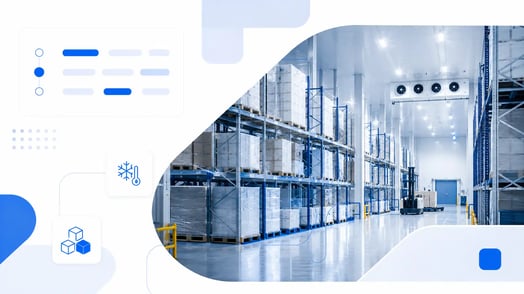
A cold storage warehouse is a facility specifically designed to store products under controlled temperature conditions. It is sometimes referred to as a refrigerated warehouse or a cold storage facility, although the term "refrigerated warehousing" more often applies to short-term chilled storage, while "cold storage" can also include deep-freeze operations.
Unlike conventional warehouses, these facilities maintain precise temperature ranges to preserve product quality, safety, and compliance throughout the storage process.
Cold storage warehouses are commonly used for:
- Food and beverage products
- Frozen foods
- Fresh produce
- Dairy products
- Pharmaceuticals
- Medical supplies
- Cosmetics
- Chemicals and temperature-sensitive materials
Depending on product requirements, warehouses may operate under different temperature conditions:
- Refrigerated storage: typically between 0°C and 8°C
- Chilled storage: generally between 2°C and 15°C depending on the product
- Frozen storage: usually below -18°C
- Deep-freeze storage: down to -30°C or lower
These facilities act as critical links between manufacturers, distributors, retailers, healthcare providers, and end customers.
Why cold storage warehouses are essential
Maintaining product integrity is the primary objective of cold storage logistics.
Without proper temperature control, products may:
- Lose quality
- Become unsafe for consumption
- Fail regulatory inspections
- Require disposal
- Generate financial losses
Cold storage facilities support several strategic supply chain objectives:
- Preserving product quality
- Maintaining regulatory compliance
- Extending shelf life
- Supporting inventory management
- Improving delivery performance
- Reducing product waste
For industries such as food manufacturing and pharmaceuticals, cold storage is not optional, it is essential.
Types of cold storage warehouses
Traditional cold storage warehouse
This is the most common type of cold storage facility.
Products are stored on pallet racks within temperature-controlled environments. The warehouse may contain multiple temperature zones depending on the nature of the goods being handled.
These facilities typically support both storage and distribution operations.
Cross-docking facilities
Cross-docking platforms are designed to minimize storage time.
Products arrive, are sorted, consolidated, and quickly redirected toward their final destinations.
This model is particularly useful for:
- Fresh produce
- Grocery distribution
- Retail replenishment
- Fast-moving consumer goods
Although storage time is limited, temperature control remains critical throughout the process.
Multi-level cold storage facilities
Multi-level warehouses maximize storage density by utilizing vertical space.
These facilities often rely on:
- High-reach forklifts
- Vertical lifts
- Advanced warehouse layouts
This approach helps increase storage capacity without expanding the warehouse footprint.
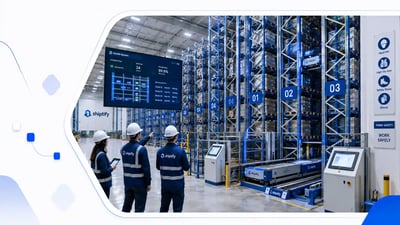
High-bay automated cold storage warehouses
High-bay warehouses can exceed 40 meters in height and are commonly found in large-scale distribution operations.
These facilities often use:
- Automated storage and retrieval systems
- Shuttle systems
- Robotics
- Stacker cranes
Automation improves storage density while reducing employee exposure to cold environments.
How a cold storage warehouse is organized
Designing a cold storage warehouse requires careful planning. Several factors influence facility layout and operations.
- Product characteristics: fresh vegetables, frozen meat, vaccines, and cosmetics all have unique temperature and handling requirements.
- Storage duration: the expected storage period impacts warehouse design, inventory management, and product rotation strategies.
- Throughput volume: facilities handling high inbound and outbound volumes require optimized dock operations and internal workflows.
- Inventory turnover: fast-moving products require different layouts compared to long-term storage goods.
- Loading dock configuration: temperature-controlled loading docks help minimize exposure during loading and unloading operations.
- Material handling equipment: cold environments require specialized equipment designed to operate efficiently at low temperatures.
- Warehouse management systems: modern warehouse management software helps monitor inventory levels, product traceability, and warehouse performance in real time.
Regulations governing cold storage warehouses
Cold storage facilities operate under strict regulatory frameworks. The specific requirements vary by country and industry, but most regulations focus on food safety, product integrity, and traceability.
Key requirements typically include:
Continuous temperature monitoring
Warehouses must continuously monitor and record storage temperatures. Alerts must be generated whenever temperatures move outside acceptable thresholds.
HACCP compliance
Food storage facilities generally operate under Hazard Analysis and Critical Control Points (HACCP) principles, a framework formalized in the FDA Food Code. This system helps identify and control food safety risks throughout the supply chain.
Hygiene and sanitation procedures
Cold storage facilities require rigorous cleaning and sanitation protocols to prevent contamination.
Product traceability
Companies must maintain accurate records showing where products originated, where they were stored, and where they were shipped.
Employee safety
Working in refrigerated environments creates specific safety challenges. Employers must provide:
- Protective clothing
- Warm rest areas
- Appropriate work schedules
- Specialized safety training
Pharmaceutical compliance
For pharmaceutical products, facilities may also need to comply with:
- Good Distribution Practice, as detailed in the WHO Good Distribution Practices guidelines
- Good Manufacturing Practice
- FDA requirements
- National healthcare regulations, such as the EU Good Distribution Practice guidelines for facilities operating in Europe
Why automate a cold storage warehouse?
Automation delivers significant benefits in temperature-controlled environments.
Improved productivity
Automated systems accelerate product storage, order picking, replenishment operations, and inventory movements. This improves warehouse throughput and service levels.
Better employee safety
Automation reduces the amount of time employees spend working in freezing conditions. This lowers exposure risks and improves working conditions.
Greater inventory accuracy
Automated systems reduce human errors and improve inventory visibility. This is particularly important for products with strict traceability requirements.
Increased storage density
Robotic systems can operate in narrower aisles and higher storage locations than traditional forklifts. This allows warehouses to maximize available space.
Lower operating costs
Although automation requires investment, it can significantly reduce long-term labor, error, and operating costs. Automation projects are often part of broader warehouse optimization initiatives.
How much does a cold storage warehouse cost?
The cost of a cold storage warehouse varies significantly depending on several factors, which explains why there is no single reference price for this type of infrastructure.
- Facility size and storage capacity: larger warehouses require more refrigeration equipment and insulation.
- Target temperature range: deep-freeze facilities below -18°C are more expensive to build and operate than chilled storage between 2°C and 15°C.
- Level of automation: automated storage and retrieval systems increase upfront investment but reduce long-term labor costs.
- Location and energy costs: electricity prices and local construction costs directly affect operating expenses.
- Regulatory requirements: pharmaceutical-grade facilities generally require additional monitoring and validation systems, which increases costs.
Beyond construction or leasing costs, ongoing expenses such as energy consumption, maintenance, and dock scheduling inefficiencies can significantly affect the total cost of operating a cold storage warehouse.
The importance of dock management in cold chain logistics
Warehouse docks are critical control points within cold chain operations. Every minute spent waiting at the dock increases the risk of temperature deviations.
Poor dock management can lead to:
- Delivery delays
- Product quality issues
- Congestion
- Reduced warehouse productivity
Efficient scheduling and coordination are therefore essential.
How Shiptidock helps optimize cold storage operations
Managing inbound and outbound flows is particularly challenging in temperature-controlled environments.
Shiptidock helps warehouse operators improve dock scheduling and coordination through a dedicated appointment management platform.
With Shiptidock, companies can:
- Schedule deliveries and pickups in advance
- Reduce truck waiting times
- Balance workload across docks
- Improve communication with carriers
- Share safety instructions automatically
- Increase visibility into upcoming arrivals
- Manage incidents more efficiently
By ensuring that vehicles arrive at the right dock at the right time, Shiptidock helps preserve cold chain integrity while improving operational efficiency.
For facilities handling temperature-sensitive products, this level of coordination can significantly reduce delays, congestion, and logistics costs.
Conclusion
Cold storage warehouses are essential components of modern supply chains.
Whether storing food products, pharmaceuticals, healthcare supplies, or other temperature-sensitive goods, these facilities must combine strict temperature control, regulatory compliance, operational efficiency, and advanced technology.
As cold chain requirements continue to increase, businesses must invest in solutions that improve visibility, coordination, and performance.
By combining modern warehouse technologies with intelligent dock scheduling software, organizations can strengthen cold chain reliability, improve service quality, and reduce overall logistics costs.