In supply chain management, every bottleneck comes at a cost. Lead times, service levels, transportation costs, and customer satisfaction can all be affected by a single disruption.
Transportation alone represents a significant share of logistics spending, while most logistics costs are concentrated in the downstream part of the supply chain, where customer expectations are highest.
This is why transshipment has become a strategic component of modern logistics networks. Once considered a simple operational necessity, it is now a powerful lever for improving transportation efficiency, expanding network coverage, reducing costs, and supporting multimodal logistics strategies.
However, when poorly planned, transshipment can also create delays, increase handling costs, and generate additional risks.
In this guide, we explain what transshipment is, when it is used, its main advantages and challenges, and how digital tools can help optimize transshipment operations.
What is transshipment?
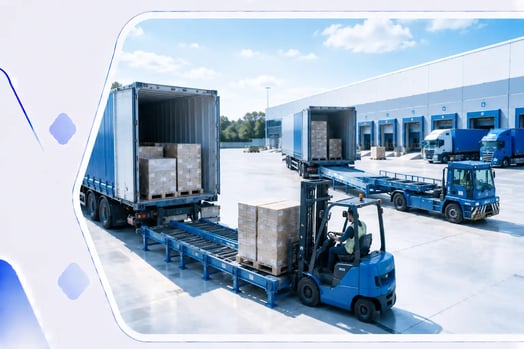
Transshipment is the process of transferring goods from one vehicle, container, or mode of transport to another during their journey to a final destination.
The operation typically involves unloading, handling, temporary storage, and reloading activities performed at an intermediate location such as:
- A port
- A logistics platform
- A distribution center
- A rail terminal
- A multimodal hub
Transshipment plays a critical role in international trade and multimodal transport by connecting different transportation networks and improving overall supply chain flexibility.
Rather than being a simple transfer point, modern transshipment hubs have become strategic logistics nodes where transportation planning, operational execution, and supply chain optimization converge.
When is transshipment used?
Transshipment can occur for several operational, commercial, or regulatory reasons.
Modal shifts
One of the most common scenarios involves switching between transportation modes.
For example:
- Ocean freight to road transport
- Rail to truck transport
- River transport to road transport
- Air freight to last-mile delivery networks
This enables companies to leverage the strengths of each transportation mode while optimizing costs and transit times.
Typical examples include combining sea freight, road transportation, and rail networks within a single transportation flow.
Shipment consolidation and deconsolidation
Transshipment hubs often serve as locations where shipments are grouped or separated.
This allows logistics providers to:
- Maximize vehicle utilization
- Consolidate freight volumes
- Reduce transportation costs
- Improve network efficiency
Organizations handling large freight volumes frequently use transshipment operations as part of broader freight brokerage and carrier optimization strategies.
Infrastructure constraints
Certain delivery locations cannot accommodate specific vehicle types.
For example:
- City centers with vehicle restrictions
- Remote regions with limited infrastructure
- Secondary ports requiring feeder transportation
In these situations, transshipment becomes a necessary part of the logistics process.
Customs and regulatory requirements
International shipments may require customs inspections, documentation verification, or regulatory controls before continuing their journey.
Transshipment facilities often provide the infrastructure required to manage these procedures efficiently.
This is particularly common when goods undergo a customs clearance process before continuing to their final destination.
Strategic supply chain optimization
Many organizations intentionally integrate transshipment into their transportation strategy to reduce costs, lower carbon emissions, or improve network flexibility.
For international flows involving multiple carriers and transport modes, transshipment becomes a powerful tool for optimizing transportation performance.
Benefits of transshipment
When properly integrated into transportation planning, transshipment offers significant advantages.
Greater logistics flexibility
Transshipment enables organizations to adapt transportation flows to operational realities.
Companies can:
- Adjust delivery routes
- Serve multiple destinations efficiently
- Manage complex distribution networks
- Support omnichannel logistics operations
This flexibility is especially valuable for businesses operating across multiple regions or countries.
Lower transportation costs
Transshipment makes multimodal transportation strategies possible.
By combining road, rail, sea, river, and air transportation, companies can:
- Reduce long-distance trucking costs
- Optimize transportation capacity
- Improve load consolidation
- Lower overall logistics spending
Many organizations leverage transshipment hubs to strengthen their transportation spend management initiatives and improve carrier utilization.
Improved market coverage
Transshipment hubs allow organizations to reach destinations that may otherwise be difficult or expensive to serve directly.
This expands distribution capabilities while supporting business growth in new markets.
By leveraging strategic logistics hubs, companies can improve delivery coverage without multiplying direct transportation routes.
For international supply chains, transshipment can also support more efficient container transport operations by connecting maritime gateways with inland distribution networks.
Stronger transportation networks
Ports, distribution centers, and multimodal terminals create robust transportation ecosystems.
Leveraging these networks helps companies:
- Increase supply chain resilience
- Diversify transportation options
- Improve service levels
- Reduce dependency on a single transportation mode
This diversification becomes increasingly important during disruptions affecting a particular transportation mode or carrier network.
For example, companies may combine road transport with rail transport or alternative multimodal routes to maintain service continuity.
Additional value-added services
Modern transshipment facilities often provide complementary logistics services such as:
- Labeling
- Repackaging
- Quality inspections
- Co-packing
- Customs processing
These services improve customer experience while reducing the need for additional warehouse operations.
Many facilities have evolved into full-service logistics hubs capable of supporting broader warehouse operations beyond simple freight transfers.
Challenges of transshipment
Although transshipment creates value, it also introduces operational risks.
Product damage or loss
Every additional handling operation increases the risk of:
- Damaged goods
- Lost shipments
- Packaging issues
- Inventory discrepancies
Proper handling procedures and shipment traceability are essential.
Organizations handling palletized freight often implement strict palletization standards to reduce damage risks during transfer operations.
Delivery delays
Poor coordination between transportation providers can result in:
- Missed connections
- Dock congestion
- Waiting times
- Extended lead times
Without proper visibility, delays can quickly propagate throughout the supply chain.
The challenge becomes even greater when multiple transportation providers are involved.
Increased operational complexity
Transshipment requires coordination between multiple stakeholders, including:
- Carriers
- Freight forwarders
- Warehouses
- Port operators
- Customs authorities
Managing these interactions manually often creates inefficiencies.
Companies increasingly rely on digital shipper TMS platforms to centralize communication and transportation execution.
Additional handling costs
Each transfer operation generates labor, equipment, and infrastructure costs.
Companies must carefully evaluate whether the operational benefits outweigh the additional expenses.
A detailed cost analysis should include:
- Handling costs
- Storage costs
- Transportation costs
- Labor costs
- Service-level improvements
Customer service impact
When transshipment operations are not properly managed, service quality can deteriorate due to:
- Delivery delays
- Shipment errors
- Reduced visibility
- Customer dissatisfaction
Maintaining reliable shipment visibility becomes essential as transportation networks become more complex.
Solutions providing real-time shipment tracking help logistics teams proactively manage disruptions and improve customer communication.
Documentation and compliance challenges
International transshipment operations often involve extensive documentation requirements.
Examples include:
- Customs declarations
- Carrier documents
- Transport contracts
- Regulatory documentation
Digitalization initiatives such as eFTI are increasingly helping companies simplify freight information management and improve compliance across transportation networks.
How to optimize transshipment operations
Successful transshipment management requires visibility, coordination, and automation.
Use a transportation management system (TMS)
A Transportation Management System (TMS) centralizes transportation planning and execution.
It enables organizations to:
- Manage carrier relationships
- Automate transportation orders
- Track shipments in real time
- Centralize transportation documentation
- Monitor transportation KPIs
A TMS also provides greater visibility across multimodal transportation networks, helping teams identify risks before they impact operations.
Modern TMS software solutions are particularly valuable when coordinating multiple carriers and transportation modes through transshipment hubs.
Improve dock scheduling
Warehouse docks are often one of the main bottlenecks in transshipment operations.
Poor scheduling can result in:
- Vehicle queues
- Congestion
- Longer unloading times
- Missed delivery windows
Digital dock appointment scheduling systems help synchronize inbound and outbound transportation activities, improving overall flow efficiency.
For facilities handling large freight volumes, specialized dock scheduling software can significantly improve throughput and resource utilization.
Optimize inbound and outbound flows
Transshipment efficiency depends on the synchronization of incoming and outgoing transportation activities.
Organizations should focus on:
- Carrier coordination
- Resource planning
- Vehicle turnaround times
- Warehouse capacity management
Improving both inbound logistics and outbound dock management processes helps reduce bottlenecks and improve service performance.
Increase real-time visibility
Real-time shipment tracking enables logistics teams to:
- Monitor transportation progress
- Anticipate disruptions
- Improve communication
- React faster to operational issues
Visibility becomes increasingly important as transportation networks become more complex.
Transportation managers also benefit from centralized analytics through comprehensive supply chain KPIs and reporting tools.
Improve route and carrier optimization
Selecting the right carrier and transportation route directly impacts transshipment performance.
Advanced route optimization software helps organizations reduce transportation costs while improving service reliability and transit times.
How Shiptify helps optimize transshipment operations
Shiptify provides a collaborative transportation platform designed to improve visibility, coordination, and performance across complex logistics networks.
With Shiptify, companies can:
- Centralize transportation operations
- Coordinate multiple carriers
- Automate transportation workflows
- Monitor shipment performance
- Track transportation costs
- Measure CO₂ emissions
The platform helps organizations improve planning while reducing operational complexity.
Shiptify TMS
Shiptify's cloud-based TMS allows logistics teams to:
- Create transport orders in a few clicks
- Automate carrier communication
- Centralize transport documentation
- Manage multimodal transportation flows
- Compare transportation scenarios based on cost, lead time, and emissions
The solution provides complete transportation visibility from origin to final delivery.
By leveraging a modern freight management system, companies can manage transshipment activities more effectively while maintaining control over transportation performance.
ShiptiDock
ShiptiDock digitizes warehouse dock scheduling and appointment management.
The platform enables carriers to book delivery and pickup appointments online, helping companies:
- Reduce congestion
- Improve dock utilization
- Eliminate manual scheduling processes
- Increase warehouse productivity
- Improve carrier punctuality
By improving coordination at the loading dock, organizations can significantly enhance transshipment performance and reduce operational bottlenecks.
Conclusion
Transshipment is no longer just an operational transfer point within the supply chain.
It has become a strategic logistics capability that supports transportation optimization, multimodal logistics, network flexibility, and customer service performance.
When properly managed, transshipment helps organizations:
- Reduce transportation costs
- Improve delivery performance
- Increase transportation flexibility
- Strengthen supply chain resilience
- Expand market reach
However, achieving these benefits requires visibility, coordination, and strong execution capabilities.
Combining a modern TMS with digital dock scheduling solutions provides the visibility and coordination required to transform transshipment from a potential bottleneck into a competitive advantage.
As transportation networks become increasingly complex, organizations that invest in digital transportation management tools will be better positioned to improve performance, reduce costs, and build more resilient logistics operations.
Discover how Shiptify helps logistics teams optimize transportation flows, improve transshipment performance, and gain complete visibility across the supply chain.