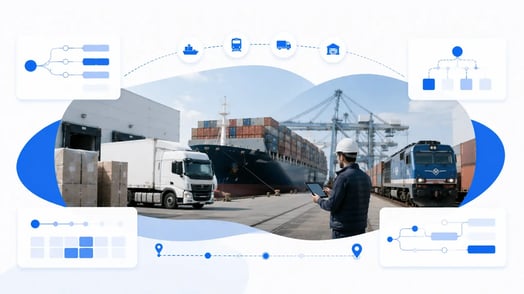
As supply chains become increasingly complex, companies are looking for more efficient, flexible, and sustainable ways to move goods.
This is where multimodal transport plays a critical role.
By combining several transportation modes within a single logistics operation, multimodal transport helps businesses optimize costs, improve delivery performance, and reduce their environmental impact.
According to French government data, combined transport volumes increased significantly between 2015 and 2021, highlighting the growing importance of multimodal logistics solutions across Europe.
In this guide, we'll explain how multimodal transport works, its advantages, the differences between multimodal and intermodal transport, and how a Transportation Management System (TMS) can help optimize multimodal operations.
What is multimodal transport?
Multimodal transport refers to the movement of goods using two or more transportation modes under a single transportation contract.
These modes may include:
- road transport;
- rail transport;
- sea freight;
- air freight;
- inland waterway transport.
The objective is to leverage the strengths of each transportation mode while minimizing costs, transit times, and environmental impact.
How does multimodal transport work?
Multimodal transport begins with the selection of the most efficient transportation route based on factors such as:
- cargo characteristics;
- delivery deadlines;
- transportation costs;
- sustainability objectives.
Throughout the journey, goods may be transferred between different transportation modes at dedicated terminals or logistics hubs.
These transfer points ensure smooth cargo handling and efficient coordination between transportation providers.
A well-known example is the Channel Tunnel connection between France and the United Kingdom, where trucks are transported by rail through the tunnel before continuing their journey by road.
Effective route planning and logistics scheduling are essential to ensure seamless coordination between transportation modes.
The five main transportation modes
Each transportation mode offers specific advantages depending on the shipment's requirements.
Air freight
Air transport is the fastest transportation mode and is often used for:
- high-value goods;
- urgent shipments;
- time-sensitive products.
Advantages
- very fast transit times;
- global connectivity;
- high reliability.
Limitations
- high transportation costs;
- limited capacity;
- significant carbon footprint.
Sea freight
Sea freight remains the preferred solution for transporting large volumes internationally.
Advantages
- cost-effective for large shipments;
- high cargo capacity;
- global coverage.
Limitations
- longer transit times;
- port dependency;
- weather-related disruptions.
Road transport
Road transportation provides maximum flexibility and plays a central role in first-mile and last-mile delivery.
Advantages
- door-to-door service;
- extensive network coverage;
- flexible scheduling.
Limitations
- traffic congestion;
- fuel costs;
- higher emissions than rail.
Rail freight
Rail transport is particularly efficient for long-distance freight movements.
Advantages
- large carrying capacity;
- lower emissions;
- predictable transit schedules.
Limitations
- limited network flexibility;
- dependence on rail infrastructure.
Inland waterway transport
River transportation is often used for bulk commodities and heavy cargo.
Advantages
- low transportation costs;
- reduced environmental impact;
- suitable for large volumes.
Limitations
- slower transit times;
- limited geographic coverage.
Common multimodal transport combinations
Several multimodal combinations are commonly used across supply chains.
Rail-road transport
Rail is used for long-distance transportation, while trucks handle collection and final delivery.
This combination helps reduce costs, congestion, and carbon emissions while supporting broader supply chain optimization initiatives.
Sea-road transport
Goods are transported internationally by sea before being delivered to their final destination by truck.
This is one of the most common multimodal transportation models worldwide, especially for container transport operations.
Air-road transport
Air freight is used for the main transportation leg, while road transport ensures local pickup and delivery.
This solution is particularly suitable for urgent shipments.
Piggyback transport : a sustainable logistics solution
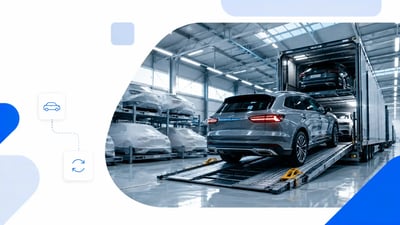
Piggyback transport is a form of combined transport that involves loading trucks, trailers, or containers directly onto rail wagons.
Once they reach their destination terminal, they continue their journey by road.
This approach combines the flexibility of road transport with the environmental and economic advantages of rail freight.
Key benefits include:
- reduced CO₂ emissions;
- lower fuel consumption;
- reduced road congestion;
- improved transportation efficiency.
Multimodal transport vs intermodal transport
Although the terms are often used interchangeably, they refer to different transportation models.
What is intermodal transport?
Intermodal transport involves moving goods using multiple transportation modes while keeping the same loading unit throughout the journey.
For example, a shipping container may travel by truck, rail, and sea without the cargo ever being unloaded from the container.
What is the difference between multimodal and intermodal transport?
The main difference lies in responsibility and cargo handling.
In multimodal transport:
- one operator typically assumes overall responsibility for the shipment;
- multiple transportation modes are managed under a single contract.
In intermodal transport:
- cargo remains in the same loading unit;
- several carriers may be involved;
- contractual responsibility may be shared.
Both approaches help improve transportation efficiency and sustainability.
Key stakeholders in multimodal transport
Successful multimodal operations depend on close collaboration between several stakeholders.
These include:
- shippers;
- freight forwarders;
- multimodal transport operators;
- carriers;
- terminal operators;
- customs authorities.
Multimodal transport operators play a particularly important role by coordinating transportation activities and ensuring smooth transitions between modes.
Their mission is often supported by advanced freight management systems that centralize transportation planning and execution.
What are the benefits of multimodal transport?
Lower transportation costs
By selecting the most efficient combination of transportation modes, companies can significantly reduce freight costs and improve transportation spend management.
Reduced carbon footprint
Replacing long-distance road transport with rail or inland waterways helps lower greenhouse gas emissions.
Greater flexibility
Multimodal transport allows companies to adapt routes according to operational constraints and market conditions.
Improved supply chain resilience
Diversifying transportation modes reduces dependency on a single network and helps mitigate disruptions.
Better capacity management
Using multiple transportation modes provides greater flexibility during periods of high demand.
How technology improves multimodal transport management
Managing multimodal transportation manually can quickly become complex.
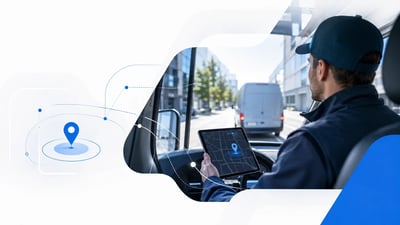
Modern Transportation Management Systems (TMS) help organizations centralize transportation planning, execution, and monitoring.
A TMS enables companies to:
- track shipments in real time;
- manage carrier relationships;
- optimize transportation costs;
- improve visibility across the supply chain;
- automate operational workflows.
These capabilities, combined with advanced transportation management system features, help logistics teams improve performance while maintaining full control over transportation operations.
Why use Shiptify for multimodal transport management?
Shiptify simplifies multimodal transportation management through a single digital platform connecting shippers and carriers.
With Shiptify, companies can:
- manage all transportation modes from one interface;
- monitor shipments in real time;
- optimize transportation planning;
- analyze logistics performance through dedicated dashboards;
- improve collaboration across the supply chain.
Today, Shiptify connects tens of thousands of carriers within a single digital ecosystem, helping businesses streamline freight transport operations and improve supply chain efficiency.
Conclusion
Multimodal transport has become a strategic solution for companies seeking to improve efficiency, reduce costs, and meet sustainability objectives.
By combining the strengths of different transportation modes, businesses can build more resilient and environmentally responsible supply chains.
When supported by a Transportation Management System such as Shiptify, multimodal transport becomes even more efficient, providing the visibility, coordination, and agility needed to manage increasingly complex logistics networks.