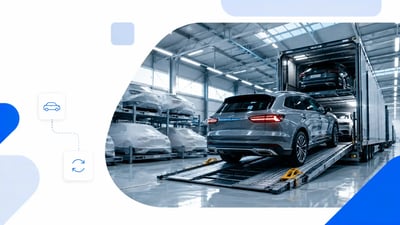
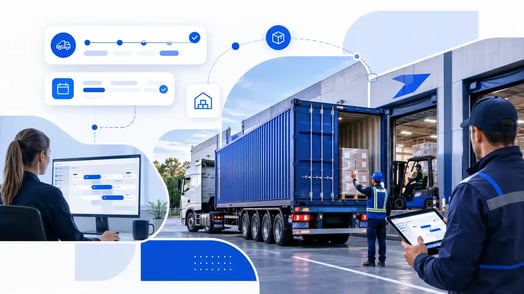
Container unloading is a critical step in modern logistics operations.
As international trade continues to expand, warehouses and distribution centers must process growing volumes of containers efficiently while maintaining safety, productivity, and inventory accuracy.
Whether goods arrive via sea freight, rail, or road transportation, the unloading process directly impacts warehouse performance, transportation costs, and customer satisfaction.
In this guide, we'll explain how container unloading works, the main unloading methods, the equipment involved, the operational challenges, and the best practices companies can implement to improve efficiency.
What is container unloading?
Container unloading, sometimes referred to as container destuffing, is the process of removing goods from a shipping container upon arrival at a warehouse or logistics facility.
The operation is a key stage of container transport and involves transferring products from inbound containers into storage areas, staging zones, or directly into outbound transportation flows.
Depending on the shipment type, unloading may be performed manually, mechanically, or through automated systems.
Efficient container unloading is essential to reduce delays, improve inventory accuracy, and maximize warehouse productivity.
Why is container unloading important?
The unloading process affects multiple supply chain activities.
An inefficient operation can create bottlenecks that impact:
- warehouse productivity;
- inventory accuracy;
- transportation schedules;
- labor utilization;
- customer service levels.
Container unloading is therefore a critical component of inbound logistics and overall supply chain performance.
How does the container unloading process work?
Although procedures vary depending on cargo type, most unloading operations follow a structured process.
Arrival and dock assignment
When a container arrives at the facility, it is assigned to a designated unloading area.
Modern warehouses often rely on dock appointment scheduling solutions to coordinate carrier arrivals and reduce congestion. For high-volume facilities, solutions such as ShiptiDock help optimize dock occupancy and appointment management.
Documentation verification
Before unloading begins, warehouse teams verify transport documentation. This often includes checking the Bill of Lading, shipment references, and delivery information to ensure cargo matches the expected order.
Container inspection
Teams inspect the container to verify:
- seal integrity;
- visible damage;
- cargo stability;
- safety conditions.
Early inspection helps prevent disputes and operational disruptions.
Cargo unloading
Goods are removed from the container using manual labor or specialized handling equipment. The unloading method depends on:
- cargo type;
- weight;
- packaging configuration;
- warehouse infrastructure.
Inventory control
Once unloaded, products are counted, inspected, and recorded. Organizations using WMS software can automate inventory updates and improve stock accuracy in real time.
Storage and distribution
After verification, products are transferred to storage locations, staging zones, or directly into outbound operations. Facilities operating under customs regulations may temporarily store imported goods in a Bonded Warehouse before final customs release.
Common container unloading methods
Beyond the general workflow, companies typically choose between several unloading methods depending on their facility, timeline, and cargo type.
Live unload
The driver remains on-site while the container is emptied. This reduces container rental time but requires enough staff and equipment to unload quickly, since delays can lead to additional waiting fees.
Drop and return
The carrier drops the container at the facility and returns later to collect it. This method offers more flexibility for warehouses that need extra time or want to unload during off-peak hours.
On the chassis
The container stays on the truck chassis during unloading. It works well for light or palletized goods and avoids the need for additional lifting equipment, but it is less suitable for heavy or unstable loads.
Dock unloading
The container is unloaded directly at a loading dock, providing a stable and controlled environment. This is the standard method for high-volume operations equipped with forklifts, conveyors, and other handling equipment.
Equipment used for container unloading
Several types of equipment support unloading operations.
Forklifts
Forklifts remain one of the most common tools used for palletized freight handling.
Pallet jacks
Pallet jacks are suitable for lighter loads and short-distance movements.
Conveyor systems
Conveyors help accelerate unloading operations and reduce manual handling.
Warehouse automation technologies
Modern facilities increasingly rely on warehouse management software and automated material handling systems to improve productivity and reduce labor requirements.
Common challenges in container unloading
Dock congestion
Poor coordination of carrier arrivals can lead to significant delays. Many organizations implement Yard Management Systems (YMS) to improve yard visibility and vehicle flow management.
Labor shortages
Manual unloading remains labor-intensive, making workforce availability a critical concern.
Inventory discrepancies
Errors during unloading can create stock inaccuracies and impact downstream operations.
Safety risks
Heavy loads, unstable cargo, and warehouse traffic increase accident risks. Maintaining strict safety procedures is essential to protect employees and cargo.
Best practices for efficient container unloading
Optimize dock operations
Companies should continuously improve loading dock utilization to minimize waiting times and maximize throughput.
Improve visibility
Real-time shipment tracking allows warehouse teams to anticipate arrivals and allocate resources more effectively.
Leverage digital tools
Warehouse and transportation platforms help streamline workflows and reduce manual processes.
Monitor performance indicators
Organizations should track relevant supply chain KPIs such as:
- unloading time per container;
- dock utilization rates;
- labor productivity;
- inventory accuracy;
- carrier waiting times.
Analyze operations through dashboards
A dedicated supply chain dashboard provides real-time visibility into warehouse and transportation performance.
How technology improves container unloading
Digitalization is transforming warehouse operations. Modern solutions help organizations:
- automate inventory updates;
- improve labor planning;
- reduce paperwork;
- increase visibility;
- improve coordination with carriers.
These improvements contribute directly to supply chain optimization initiatives and support long-term operational excellence.
How a TMS supports unloading operations
A Transportation Management System (TMS) helps organizations coordinate inbound transportation and warehouse activities more effectively. Benefits include:
Transportation visibility
Monitor inbound shipments before arrival.
Carrier collaboration
Improve communication with transportation providers.
Resource planning
Anticipate warehouse workloads and labor requirements.
Cost reduction
Better planning helps organizations reduce supply chain costs while improving service quality.
Why use Shiptify?
Shiptify helps logistics teams improve inbound transportation visibility and warehouse coordination through a collaborative transportation platform. With Shiptify, companies can:
- track inbound shipments in real time;
- coordinate carrier arrivals;
- improve dock planning;
- centralize transportation information;
- monitor logistics performance;
- optimize warehouse workflows.
This enables organizations to improve efficiency while maintaining full control over inbound logistics operations.
Conclusion
Container unloading is far more than a simple warehouse activity. It directly influences transportation performance, inventory accuracy, warehouse productivity, and customer satisfaction.
By combining best practices, modern warehouse technologies, and transportation visibility tools, organizations can significantly improve operational efficiency.
Companies that optimize container unloading processes gain a competitive advantage through lower costs, faster operations, and stronger supply chain performance.
Improve your container unloading operations with Shiptify
Discover how Shiptify helps logistics teams improve transportation visibility, optimize dock operations, and streamline inbound logistics through a single collaborative platform.