In logistics, purchasing transportation services can be a complex task. Companies must maintain smooth supply chain operations while controlling costs, ensuring service quality, and meeting customer expectations.
This is where the shipper plays a critical role. As the party responsible for organizing and managing transportation operations, the shipper acts as the link between suppliers, carriers, freight forwarders, and customers. On transport documents such as a bill of lading or a CMR consignment note, this same party is often referred to as the consignor, the entity that hands the goods over to the carrier.
In this guide, we explore the role of the shipper (or consignor), its responsibilities, the different stakeholders involved in transportation operations, and how technology can help simplify transport management.
What is a transport order?
A transport order (TO) is the starting point of any transportation operation.
It acts as the contractual agreement between the shipper and the carrier and contains all the information required to execute the shipment, including:
- Type of goods
- Weight and dimensions
- Loading location
- Delivery location
- Pickup and delivery schedules
- Transportation requirements
- Vehicle specifications
- Insurance information
- Payment terms
The transport order forms the foundation of the entire logistics operation. Any inaccuracies can lead to delays, additional costs, disputes, or delivery failures.
Who is a shipper?
A shipper is any organization or individual that enters into a transportation agreement with a carrier to move goods from one location to another.
While individuals can occasionally act as shippers, for example when moving house, the vast majority of shippers are businesses such as:
- Manufacturers
- Importers
- Exporters
- Retailers
- Distributors
- Food and beverage companies
- Industrial suppliers
Examples of shippers
An automotive parts manufacturer shipping components to vehicle assembly plants.
An international humanitarian organization transporting emergency supplies and medical equipment to disaster areas.
An artisan cheese producer delivering products to supermarkets, restaurants, and specialty stores.
Shipper vs. consignor vs. consignee: what is the difference?
These three terms are closely related but do not always describe the same party.
- The shipper is the company or individual that organizes and pays for the transportation of the goods.
- The consignor is the party named on the transport contract, such as a bill of lading or a CMR consignment note, that physically hands the goods over to the carrier.
- The consignee is the final recipient who takes delivery of the goods at destination.
In most cases, the shipper and the consignor are the same company. However, they can differ: a manufacturer may act as the consignor, handing goods to a freight forwarder who takes on the role of shipper and organizes transportation on behalf of an exporter. Clarifying these roles in advance helps avoid disputes over liability, documentation, and delivery instructions. According to the National Motor Freight Traffic Association, confusing these roles is one of the most common sources of disputes in freight contracts.
What is the role of a shipper?
The shipper plays a central role throughout the transportation process.
As the coordinator of transport operations, the shipper is responsible for planning, organizing, and supervising the movement of goods from origin to destination.
Key responsibilities include:
- Organizing transportation operations
- Determining loading and unloading locations
- Planning transportation routes
- Selecting carriers
- Negotiating transportation rates
- Managing transportation documentation
- Monitoring shipment execution
- Coordinating communication between stakeholders
- Managing transportation incidents and exceptions
When disruptions occur, such as delays, damages, delivery refusals, or operational incidents, the shipper is often responsible for coordinating corrective actions and ensuring business continuity.
In many ways, the shipper acts as the conductor of the entire transportation operation.
How do shippers select carriers?
Every transportation project has unique requirements.
However, most shippers evaluate carriers based on three fundamental criteria:
- Cost
- Service reliability
- Cargo security
Additional factors often influence carrier selection, including:
Flexibility
Some businesses require carriers capable of handling fluctuating shipment volumes or serving multiple destinations.
Visibility and tracking
Real-time shipment tracking has become increasingly important for managing customer expectations and supply chain performance.
Multimodal capabilities
Companies operating internationally often seek transportation partners capable of coordinating road, rail, air, and ocean freight through a comprehensive multimodal transport strategy.
Customer service quality
Responsiveness and problem-solving capabilities can become major differentiators between carriers.
Regulatory compliance
For international shipments, customs broker expertise and regulatory compliance are critical.
Sustainability
Many organizations now evaluate carriers based on environmental performance.
As transportation remains one of the largest contributors to global CO2 emissions, carbon reduction initiatives are becoming a key selection criterion.
Key stakeholders in transportation operations
Transportation involves a wide network of stakeholders beyond the shipper and carrier.
The carrier
The carrier physically transports the goods and is generally responsible for ensuring delivery within agreed service levels.
The consignee
The consignee is the final recipient of the shipment.
The freight broker
A freight brokerage provider acts as an intermediary between shippers and carriers, helping companies identify suitable transportation solutions.
The freight forwarder
In international logistics, freight forwarders coordinate complex transportation operations involving multiple carriers, customs procedures, documentation requirements, and regulatory compliance.
The chartering specialist
For multimodal transportation projects or specific transport requirements, a chartering specialist can organize dedicated transportation assets such as:
- Trucks
- Aircraft
- Trains
- Vessels
Logistics service providers
Additional partners may provide services such as:
- Warehousing
- Packaging
- Handling
- Cross-docking
- Reverse logistics
Technology providers
Technology companies supply software solutions that help optimize transportation operations.
Transportation Management Systems (TMS) have become essential tools for coordinating transportation activities and improving communication across the supply chain.
Transportation responsibilities and liability
Transportation operations involve numerous stakeholders and potential risks.
Understanding responsibilities is essential to avoid disputes and ensure smooth execution.
Delays
Delays may result from:
- Traffic congestion
- Vehicle breakdowns
- Accidents
- Roadworks
- Adverse weather conditions
- Loading issues
In most cases, the carrier is responsible for meeting agreed delivery schedules, while the shipper must provide accurate shipment information and requirements.
Cargo damage
Damage may occur due to:
- Improper handling
- Inadequate packaging
- Weather exposure
- Temperature excursions
The carrier is generally responsible for cargo during transportation unless force majeure applies.
The shipper remains responsible for ensuring proper packaging and labeling.
Cargo loss
Lost shipments can create significant operational and financial consequences.
Carriers are typically responsible for cargo security during transportation, while shippers must provide complete and accurate documentation.
Regulatory compliance
Customs issues and regulatory non-compliance can lead to delays, fines, or shipment detention.
Both shippers and freight forwarders share responsibility for ensuring proper documentation and compliance, including proper management of the customs clearance process.
Legal compliance
All parties involved in transportation operations must comply with applicable national and international regulations.
Force majeure
Events such as:
- Natural disasters
- Strikes
- Armed conflicts
- Pandemics
may result in shared or limited liability depending on contractual terms.
International conventions such as the CMR framework for road transportation, or the Montreal Convention, which replaced the 1929 Warsaw Convention for most signatory countries in air freight, often define liability frameworks.
Challenges facing modern shippers
Access to transportation capacity
Finding the right transportation partner is not always straightforward.
During peak seasons, transportation capacity can become limited, making it difficult to secure competitive rates and reliable service.
Lack of market transparency
Comparing transportation offers remains a challenge.
Carriers often use different pricing structures, service conditions, and surcharge models, making comparisons difficult.
This lack of transparency can complicate decision-making and increase procurement complexity.
Obtaining and comparing a reliable freight quotation from multiple carriers is therefore essential.
Sustainability and regulatory pressure
Shippers face growing pressure to reduce the environmental footprint of their transportation operations while meeting new reporting obligations.
Balancing cost control with decarbonization targets requires better visibility over carbon emissions per shipment, mode, and lane, which is difficult to achieve without dedicated tools.
How can a TMS simplify transportation management?
Transportation Management Systems have become essential tools for modern shippers.
By digitizing transportation processes, a TMS helps companies improve efficiency, reduce costs, and gain greater visibility across their operations.
With a solution such as Shiptify, companies can:
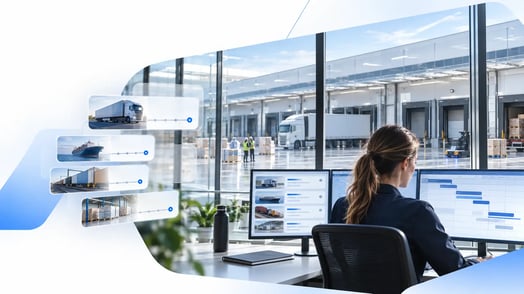
- Request transportation quotes from multiple carriers through a single platform
- Compare carrier offers quickly and efficiently
- Track shipments from pickup to delivery
- Manage transportation incidents in real time
- Improve appointment scheduling and dock operations
- Monitor performance through dashboards and KPIs
- Automate repetitive administrative tasks
- Centralize transportation documentation
Automation reduces manual workload while improving accuracy and responsiveness.
As a result, shippers gain greater control over transportation operations while improving service quality and reducing overall logistics costs.
Organizations using a dedicated shipper TMS can further streamline carrier management and transportation procurement.
Conclusion
The shipper, also known as the consignor on transport documents, plays a critical role in transportation management, acting as the coordinator between carriers, logistics providers, customers, and other supply chain stakeholders.
From selecting transportation partners and negotiating rates to managing documentation and resolving disruptions, the shipper is at the center of every transportation operation.
As transportation networks become increasingly complex, digital tools such as Transportation Management Systems help companies improve visibility, simplify operations, and make better transportation decisions.
By combining strong operational processes with modern technology, shippers can build more resilient, efficient, and cost-effective supply chains while continuously working to reduce supply chain costs.