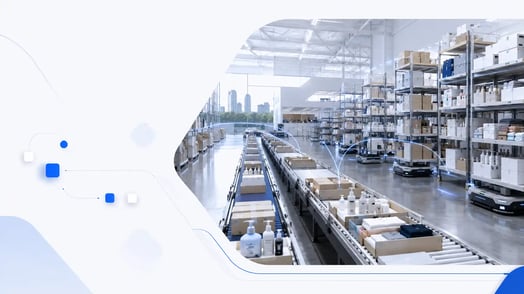
Retail logistics has become one of the most complex areas of supply chain management.
Consumers expect products to be available at all times, deliveries to be faster than ever, and returns to be simple and seamless. At the same time, retailers face increasing transportation costs, inventory challenges, labor shortages, and growing sustainability requirements.
The continued growth of e-commerce has further increased pressure on logistics operations. According to industry estimates, online retail sales continue to account for an increasing share of total retail revenue, forcing companies to rethink how products move across their supply chains.
To remain competitive, retailers must build agile, resilient, and highly efficient logistics networks.
In this guide, we explore the key characteristics of retail logistics, the major challenges facing the sector, and the technologies helping companies improve performance in 2026.
What is retail logistics?
Retail logistics refers to the planning, execution, and management of product flows from suppliers to stores, distribution centers, and final consumers.
Its objective is simple:
Deliver the right product, to the right location, at the right time, while minimizing operational costs.
Retail logistics includes:
- Inventory management
- Transportation planning
- Warehouse operations
- Store replenishment
- E-commerce fulfillment
- Last-mile delivery
- Returns management
Because retail businesses often manage thousands of SKUs across multiple sales channels, logistics plays a critical role in maintaining profitability and customer satisfaction.
The key characteristics of retail logistics
Retail supply chains operate under unique constraints.
Product availability
One of the primary objectives of retail logistics is ensuring product availability.
Stockouts directly impact revenue and customer loyalty. Retailers must therefore maintain sufficient inventory while avoiding excessive stock levels that increase storage costs.
Achieving this balance requires accurate forecasting and strong inventory visibility.
To avoid both shortages and overstock situations, retailers need accurate inventory planning and real-time stock monitoring.
High delivery expectations
Modern consumers expect fast and reliable deliveries.
Same-day delivery, next-day delivery, click-and-collect, and flexible fulfillment options have become standard expectations across many retail sectors.
As a result, logistics teams must continuously optimize transportation and warehouse operations.
Large distribution networks
Retailers often operate complex networks consisting of:
- Suppliers
- Distribution centers
- Fulfillment centers
- Physical stores
- E-commerce channels
Managing inventory and product flows across these locations requires advanced coordination and real-time visibility.
Many organizations rely on a centralized supply chain dashboard to monitor performance across their logistics network.
Seasonal demand fluctuations
Retail demand can vary significantly throughout the year.
Holiday seasons, promotional events, and product launches often create substantial volume peaks that require careful planning and resource allocation.
Maintaining the right stock coverage during these periods is essential to balance service levels and inventory costs.
The biggest challenges in retail logistics
Omnichannel fulfillment
Consumers increasingly move between online and offline channels during their purchasing journey.
They may:
- Purchase online and collect in store
- Buy in store and request home delivery
- Return online purchases to physical locations
Supporting these omnichannel experiences requires seamless coordination between inventory, transportation, and fulfillment operations.
Faster delivery requirements
Delivery speed has become a major competitive differentiator.
Retailers must continuously improve:
- Order processing times
- Transportation efficiency
- Warehouse productivity
- Last-mile delivery performance
Meeting these expectations often requires investments in automation and logistics technology.
Solutions such as route optimization software help retailers improve delivery performance while reducing transportation costs.
Inventory visibility
Accurate inventory information is essential for retail operations.
Without real-time visibility, companies face:
- Stockouts
- Excess inventory
- Forecasting errors
- Poor customer experiences
Modern retailers increasingly rely on digital tools to maintain accurate inventory data across their networks.
Product traceability
Consumers and regulators both demand greater transparency.
Retailers must be able to track products throughout the supply chain to ensure:
- Product quality
- Regulatory compliance
- Consumer safety
- Faster issue resolution
Traceability has become particularly important in sectors such as food, cosmetics, electronics, and healthcare.
Technologies such as shipment tracking help retailers improve visibility and maintain control over product flows from suppliers to final customers.
Sustainability requirements
Environmental concerns are increasingly influencing logistics strategies.
Retailers are under pressure to reduce their environmental footprint through:
- Sustainable packaging
- Route optimization
- Alternative transportation methods
- Waste reduction programs
- Reverse logistics initiatives
Sustainability is no longer simply a compliance issue. It has become a key factor in consumer purchasing decisions.
Many organizations are also looking for new ways to reduce supply chain costs while simultaneously lowering emissions.
How technology is transforming retail logistics
Technology plays a central role in helping retailers address these challenges.
Demand forecasting and analytics
Advanced forecasting tools use historical data, seasonality patterns, and predictive analytics to improve inventory planning.
More accurate forecasts help retailers:
- Reduce stockouts
- Lower inventory costs
- Improve service levels
Forecasting tools also help businesses define appropriate minimum stock levels and replenishment strategies.
Warehouse automation
Warehouse automation increases productivity while reducing operational errors.
Examples include:
- Automated storage systems
- Picking technologies
- Robotics
- Conveyor systems
Automation allows retailers to process growing order volumes more efficiently.
These technologies are often deployed alongside modern warehouse inventory management software solutions to improve inventory accuracy and operational performance.
Real-time visibility
Modern logistics platforms provide end-to-end visibility across the supply chain.
This enables teams to monitor:
- Inventory levels
- Shipment status
- Warehouse activity
- Transportation performance
Greater visibility supports faster and better decision-making.
Companies increasingly rely on a Transportation Management System to centralize transportation data and improve operational control.
The growing importance of reverse logistics
Returns management has become a strategic priority for retailers.
Consumers increasingly expect simple and flexible return processes.
However, returns can significantly increase logistics costs if they are not managed efficiently.
Effective reverse logistics helps retailers:
- Recover inventory faster
- Reduce waste
- Improve customer satisfaction
- Lower operational costs
As e-commerce continues to expand, reverse logistics will remain a critical component of retail supply chain performance.
Strong inventory rotation practices such as FIFO can help retailers reintegrate returned products into inventory more efficiently.
How retailers can improve logistics performance
Successful retailers typically focus on five priorities:
Improve inventory accuracy
Accurate inventory data is the foundation of efficient retail operations.
Regular audits, automated inventory tracking, and integrated systems help maintain accuracy across the network.
Maintaining appropriate safety stock levels also helps reduce stockout risks while maintaining service quality.
Optimize transportation operations
Transportation remains one of the largest logistics expenses.
Retailers can improve performance through:
- Carrier management
- Shipment consolidation
- Transportation analytics
- Freight procurement optimization
Modern shipper TMS solutions help organizations gain greater control over transportation costs and carrier performance.
Increase warehouse efficiency
Faster and more accurate warehouse operations reduce fulfillment times and improve customer satisfaction.
Processes such as pick and pack optimization play a major role in improving order preparation productivity.
Strengthen collaboration
Retail logistics depends on close coordination between suppliers, carriers, warehouses, stores, and customers.
Digital collaboration platforms help improve communication and operational alignment.
For retailers managing multiple transportation providers, multi carrier shipping software can significantly improve collaboration and shipment execution.
Invest in scalable technology
Retail supply chains must remain flexible enough to support future growth.
Scalable technology platforms provide the foundation for long-term operational efficiency.
Companies that invest in digital transformation are better positioned to adapt to evolving customer expectations and market conditions.
How Shiptify helps improve retail logistics
Shiptify offers two complementary solutions designed to improve logistics performance across retail supply chains.
Shiptify TMS
The Transportation Management System helps retailers:
- Centralize transportation operations
- Automate carrier management
- Monitor shipment performance
- Improve transportation visibility
- Reduce logistics costs
The platform acts as a transportation control tower, providing greater visibility and operational control across the entire network.
Retailers can also leverage advanced transportation spend management capabilities to identify savings opportunities and optimize freight budgets.
Shiptidock
Shiptidock focuses on warehouse dock scheduling and appointment management.
The solution helps retailers:
- Schedule inbound and outbound appointments
- Reduce dock congestion
- Improve warehouse productivity
- Reduce carrier waiting times
- Optimize resource planning
By digitizing warehouse appointments through dock scheduling software, retailers can significantly improve warehouse flow management and operational visibility.
Together, these solutions help create a more connected and efficient supply chain.
Conclusion
Retail logistics is evolving rapidly as consumer expectations continue to increase and supply chains become more complex.
Companies must simultaneously improve product availability, accelerate deliveries, increase visibility, optimize transportation, and strengthen sustainability initiatives.
Organizations that successfully combine operational excellence with modern logistics technology will be best positioned to compete in the years ahead.
By leveraging solutions such as Transportation Management Systems, warehouse scheduling platforms, and advanced analytics tools, retailers can transform logistics from a cost center into a strategic competitive advantage.
Ultimately, tracking the right supply chain KPIs and continuously improving logistics processes will be essential for maintaining long-term competitiveness in the retail sector.