Warehouse safety is no longer just a compliance requirement. It has become a strategic priority for companies looking to improve operational performance, reduce disruptions, and create a safer working environment.
As warehouses become increasingly complex, with higher throughput volumes, tighter delivery schedules, and greater automation, the consequences of a workplace incident can be significant. Beyond the human impact, accidents generate operational delays, productivity losses, equipment damage, and additional costs throughout the supply chain.
This guide explores the main warehouse safety risks, regulatory requirements, best practices, and technologies that help logistics teams create safer and more efficient operations.
Why warehouse safety matters
Modern warehouses are fast-paced environments where people, vehicles, equipment, and goods interact continuously.
Without proper safety procedures, even routine activities can create significant risks.
Common warehouse hazards include:
- Forklift and pallet truck traffic
- Falls from loading docks, ladders, or elevated work platforms
- Falling inventory and unstable loads
- Musculoskeletal injuries caused by repetitive tasks
- Fires and hazardous material incidents
- Congestion around receiving and shipping areas
- Collisions involving employees and material handling equipment
Safety incidents affect more than individual employees. They can disrupt operations, delay customer deliveries, increase insurance costs, and damage a company's reputation.
Creating a strong safety culture helps organizations reduce risks while improving productivity and employee engagement.
Understanding warehouse safety regulations
Warehouse operators must comply with workplace safety regulations designed to protect employees and ensure safe operations.
While regulations vary by country, most frameworks focus on similar principles:
- Risk assessment and prevention
- Employee training
- Personal protective equipment (PPE)
- Equipment maintenance
- Emergency preparedness
- Hazardous material management
Employers are responsible for identifying workplace hazards and implementing appropriate preventive measures.
Regular safety audits, documented procedures, and employee awareness programs are essential components of compliance.
The most common warehouse safety risks
Vehicle and forklift accidents
Forklifts remain one of the leading causes of warehouse injuries.
Risks include:
- Vehicle collisions
- Pedestrian accidents
- Improper load handling
- Speeding
- Limited visibility
Clearly separating pedestrian walkways from vehicle traffic significantly reduces these risks.
Slips, trips, and falls
Wet floors, damaged surfaces, poor lighting, and cluttered work areas frequently contribute to workplace injuries.
Preventive measures include:
- Regular housekeeping
- Clearly marked walkways
- Anti-slip flooring
- Immediate cleanup procedures
Falling objects
Poorly stacked pallets and overloaded racking systems create serious hazards.
Warehouse managers should:
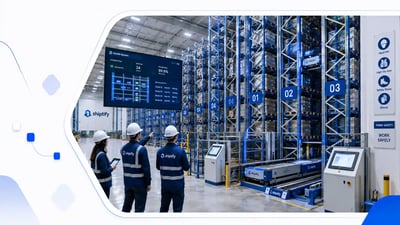
- Follow load capacity limits
- Conduct regular rack inspections
- Secure unstable inventory
- Train employees on proper storage procedures
Musculoskeletal disorders
Manual handling activities can lead to long-term injuries.
Common causes include:
- Repetitive movements
- Heavy lifting
- Poor ergonomics
- Inadequate workstation design
Mechanical handling equipment and ergonomic training can significantly reduce these risks.
Fire hazards
Warehouses often contain flammable materials, packaging, chemicals, or batteries.
A robust fire prevention strategy should include:
- Fire detection systems
- Clearly marked evacuation routes
- Fire extinguishers
- Employee emergency training
- Regular inspections
Five best practices to improve warehouse safety
Organize warehouse layouts effectively
A well-designed warehouse layout reduces risks and improves operational efficiency.
Key recommendations include:
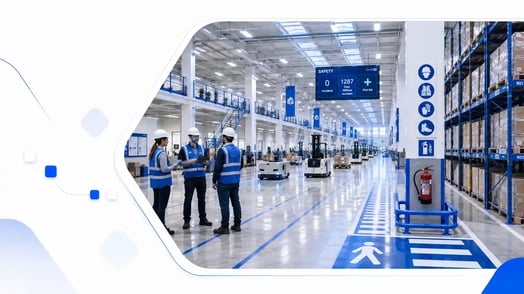
- Clearly marked traffic lanes
- Dedicated pedestrian walkways
- Segregated loading and unloading zones
- Clearly identified storage locations
- Visible safety signage
The goal is to minimize unnecessary interactions between people and equipment.
Companies pursuing broader warehouse optimization initiatives often discover that better layouts improve both productivity and safety.
Invest in continuous employee training
Training should not be limited to onboarding.
Warehouse teams should receive ongoing instruction on:
- Equipment operation
- Emergency procedures
- Hazard identification
- Safe lifting techniques
- Site-specific safety requirements
Regular refresher sessions help maintain awareness and reinforce good practices.
Ensure proper use of personal protective equipment
Personal protective equipment remains a critical safety barrier.
Depending on the activity, PPE may include:
- Safety shoes
- High-visibility clothing
- Hard hats
- Gloves
- Eye protection
- Hearing protection
Equipment should be inspected regularly and replaced when necessary.
Maintain equipment and infrastructure
Preventive maintenance reduces both safety risks and operational disruptions.
Inspection programs should cover:
- Forklifts
- Conveyor systems
- Dock equipment
- Racking structures
- Fire protection systems
A proactive maintenance strategy minimizes unexpected failures and improves workplace safety.
Prepare for emergencies
Every warehouse should maintain a clear emergency response plan.
This includes:
- Evacuation procedures
- Emergency contact lists
- First-aid resources
- Fire drills
- Incident reporting processes
Preparedness helps reduce the impact of unexpected events and protects employees.
How technology improves warehouse safety
Technology is becoming an increasingly important component of warehouse safety strategies.
Digital tools provide greater visibility, faster responses, and better risk prevention.
Computerized maintenance management systems (CMMS)
CMMS platforms help organizations:
- Schedule maintenance activities
- Monitor equipment performance
- Track inspections
- Reduce breakdowns
By identifying issues before failures occur, these systems improve both safety and operational reliability.
Safety and compliance software
Dedicated compliance tools centralize:
- Audit reports
- Safety documentation
- Incident records
- Corrective action plans
This simplifies regulatory compliance and creates greater accountability across the organization.
IoT sensors and connected devices
Internet of Things (IoT) technologies provide real-time monitoring of warehouse environments.
Applications include:
- Temperature monitoring
- Load stability detection
- Equipment performance tracking
- Restricted area access monitoring
These tools enable faster intervention before incidents occur.
Smart video monitoring
Modern video systems can automatically identify:
- Unsafe behaviors
- Unauthorized access
- PPE compliance issues
- Traffic conflicts
Artificial intelligence enhances traditional surveillance by providing proactive alerts rather than simply recording events.
Warehouse management systems
Modern warehouse management software helps organizations improve inventory visibility, task execution, and operational control.
By providing real-time visibility into warehouse activities, these platforms help managers identify congestion points, optimize workflows, and reduce operational risks.
Why dock safety deserves special attention
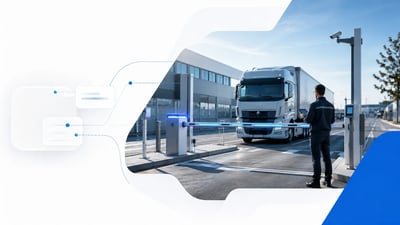
Receiving and shipping areas are among the busiest and most accident-prone zones in a warehouse.
Common risks include:
- Vehicle congestion
- Driver waiting times
- Poor communication
- Last-minute schedule changes
- Pedestrian interactions with trucks
Without proper coordination, loading docks can quickly become operational bottlenecks.
How Shiptidock improves dock safety
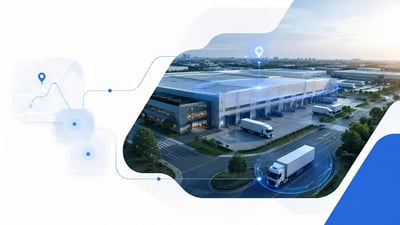
Dock appointment scheduling helps reduce congestion and improve safety by organizing vehicle arrivals and departures in advance.
With Shiptidock, companies can:
- Schedule deliveries and pickups through an online appointment system
- Distribute workloads more evenly throughout the day
- Reduce truck queues and waiting times
- Improve visibility across dock operations
- Share safety instructions with carriers before arrival
- Control site access more effectively
Real-time visibility allows warehouse teams to anticipate activity peaks and allocate resources accordingly.
The result is a safer, more organized receiving and shipping process that supports both operational efficiency and risk reduction.
Organizations looking to further improve dock performance often combine appointment management with dedicated dock scheduling software and loading dock management software.
Measuring warehouse safety performance
Effective safety management requires continuous measurement.
Key safety KPIs may include:
- Recordable incident rate
- Near-miss reporting frequency
- Safety audit compliance rate
- Corrective action completion rate
- Equipment inspection compliance
- Employee safety training completion rate
- Average incident response time
Monitoring these indicators helps organizations identify trends and continuously improve safety performance.
These metrics are often integrated into broader supply chain KPIs used to monitor logistics performance.
Building a stronger safety culture
Warehouse safety is not achieved through compliance alone.
The most successful organizations create a culture where safety becomes part of daily operations.
This requires:
- Leadership commitment
- Employee involvement
- Continuous training
- Clear communication
- Reliable processes
- Appropriate technology
When safety becomes a shared responsibility, companies reduce risks, improve productivity, and create a more positive working environment.
A strong safety culture is also a fundamental component of effective logistics management.
Conclusion
Warehouse safety is a strategic investment that protects employees while improving operational performance.
By combining effective warehouse design, employee training, preventive maintenance, digital tools, and structured dock management, logistics organizations can significantly reduce workplace risks.
Solutions such as Shiptidock help companies go one step further by improving dock visibility, reducing congestion, strengthening access control, and creating safer receiving and shipping operations.
In a logistics environment where speed and efficiency are increasingly important, warehouse safety remains one of the most effective ways to protect people while improving overall supply chain optimization efforts.