
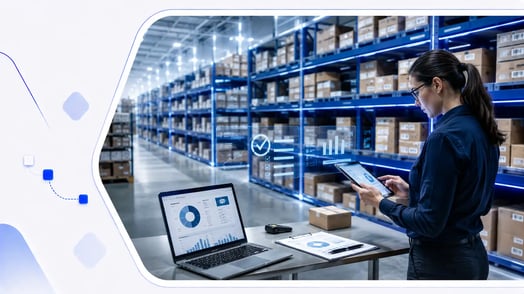
An efficient supply chain is one of the strongest drivers of business performance.
As supply chains become increasingly complex, companies must continuously evaluate their logistics operations to identify inefficiencies, reduce costs, and improve service levels. This is where a supply chain audit becomes essential.
A well-executed audit helps organizations assess logistics performance, benchmark their operations, and identify opportunities for improvement. Combined with modern digital tools and performance dashboards, it becomes a powerful lever for building a more agile and resilient supply chain.
In this guide, we'll explain how a supply chain audit works, which KPIs to monitor, and how technology can help transform logistics performance.
What is a supply chain audit?
A supply chain audit is a comprehensive assessment of the processes used to manage the flow of goods, information, and resources across the supply chain.
The objective is to evaluate operational performance, identify inefficiencies, and uncover opportunities for improvement.
A supply chain audit typically reviews:
- procurement processes;
- inventory management;
- transportation operations;
- order fulfillment;
- warehouse performance;
- customer service levels;
- technology usage;
- regulatory compliance.
The audit provides a detailed view of how effectively the supply chain supports business objectives.
Organizations often use audits as part of broader supply chain optimization initiatives.
Why conduct a supply chain audit?
A supply chain audit enables companies to gain a clear understanding of their logistics performance.
Its primary objectives include:
- identifying operational inefficiencies;
- reducing logistics costs;
- improving service levels;
- optimizing resource utilization;
- supporting digital transformation initiatives;
- strengthening supply chain resilience.
The audit serves as a foundation for continuous improvement and long-term operational excellence.
Key steps in a supply chain audit
A successful audit follows a structured methodology.
1. Define objectives and scope
The first step is to establish clear audit objectives.
Companies should determine:
- which processes will be evaluated;
- which business units are involved;
- which performance indicators will be measured.
Clearly defining the scope ensures a focused and actionable audit.
2. Collect operational data
The audit team gathers information from multiple sources, including:
- transportation data;
- inventory records;
- financial reports;
- operational procedures;
- customer service metrics.
Data collection may also include employee interviews and on-site observations.
3. Analyze performance
Collected data is evaluated against established benchmarks and industry best practices.
The objective is to identify:
- inefficiencies;
- bottlenecks;
- performance gaps;
- cost drivers.
This analysis provides a factual basis for improvement initiatives.
Transportation-related evaluations often leverage data generated by freight management systems.
4. Identify opportunities for improvement
Based on audit findings, companies can prioritize corrective actions and performance improvement opportunities.
These may include:
- process redesign;
- automation projects;
- technology upgrades;
- organizational adjustments.
5. Present findings and recommendations
Audit results should be documented and presented to key stakeholders.
A detailed report typically includes:
- performance analysis;
- identified risks;
- improvement opportunities;
- recommended actions.
6. Implement an action plan
Recommendations are translated into concrete initiatives with defined responsibilities and timelines.
Successful implementation requires strong alignment between operational teams and management.
7. Monitor progress
Performance should be monitored continuously after implementation to ensure expected improvements are achieved.
This is where dashboards and KPI monitoring become particularly valuable.
Why benchmarking matters in a supply chain audit
Benchmarking is a fundamental component of any supply chain audit.
The purpose is to compare current performance against a reference framework or industry standard.
Benchmarking can be based on:
- internal company targets;
- industry best practices;
- competitor performance;
- recognized logistics frameworks.
The gap between current performance and target performance helps identify priorities for improvement.
Which KPIs should be measured?
The effectiveness of a supply chain audit depends heavily on the quality of the selected KPIs.
Key performance indicators should align with strategic business objectives while remaining simple enough to support decision-making.
Financial KPIs
Examples include:
- logistics cost per shipment;
- transportation costs;
- inventory carrying costs;
- overall supply chain costs.
Monitoring transportation spend management is particularly important for controlling logistics budgets.
Service KPIs
Examples include:
- customer service rate;
- on-time delivery rate;
- order accuracy;
- complaint rate.
Operational KPIs
Examples include:
- inventory turnover;
- warehouse utilization;
- supplier performance;
- forecast accuracy.
A robust framework of supply chain KPIs enables organizations to monitor performance consistently.
The most effective KPI frameworks balance financial, operational, and customer-focused metrics.
How to use KPIs effectively
Collecting KPIs is not enough.
Organizations must establish:
- reliable data sources;
- reporting frequency;
- dashboard ownership;
- performance review processes.
The value of KPIs comes from their ability to support decision-making and drive action.
For example:
- CRM systems provide customer-related metrics;
- ERP systems support financial analysis;
- TMS platforms provide transportation data;
- WMS platforms generate warehouse performance metrics.
Businesses frequently connect ERP and WMS systems to improve data consistency and reporting accuracy.
Why dashboards are more effective than periodic audits alone
While audits remain valuable, modern supply chains require continuous visibility.
A dashboard complements the audit process by providing real-time performance monitoring.
Faster decision-making
Managers can identify issues and take corrective actions immediately.
Continuous performance monitoring
Dashboards provide an ongoing view of progress toward operational goals.
Better resource allocation
Real-time visibility enables companies to optimize resources more effectively.
Trend analysis
Historical KPI tracking helps identify long-term performance trends and recurring issues.
Greater employee engagement
Performance dashboards increase transparency and encourage accountability across teams.
For this reason, leading organizations combine periodic audits with continuous KPI monitoring.
Why use Shiptify to monitor supply chain performance?
Shiptify helps companies transform transportation data into actionable insights through advanced reporting and dashboard capabilities.
Steering dashboard
Create customized KPIs and performance reports tailored to your logistics objectives.
General dashboard
Monitor shipments, transportation spending, quotation activity, and cost savings through a single interface.
Quotation dashboard
Analyze carrier response rates, quotation performance, and procurement efficiency.
Tracking dashboard
Measure delivery performance through key indicators such as on-time departures and on-time deliveries.
Invoicing dashboard
Monitor transportation costs, billing accuracy, and compliance rates.
Activity monitoring dashboard
Compare current logistics activity with previous periods to identify trends and improvement opportunities.
Sustainability dashboard
Track CO₂ emissions, shipment volumes, and transportation distances to support environmental objectives.
These capabilities are powered by advanced TMS software and robust transportation management system features.
Why continuous performance management matters
A supply chain audit provides a valuable snapshot of current operations.
However, long-term success depends on continuous visibility and performance monitoring.
By combining periodic audits with real-time dashboards, companies can:
- improve operational efficiency;
- reduce logistics costs;
- strengthen supply chain resilience;
- improve customer satisfaction;
- accelerate decision-making.
Warehouse-related metrics can also be enhanced through dedicated warehouse management software and WMS software.
Conclusion
A supply chain audit is an essential tool for evaluating logistics performance and identifying opportunities for improvement.
However, the most successful organizations go beyond periodic audits by implementing continuous KPI monitoring and real-time performance dashboards.
With Shiptify, logistics teams gain complete visibility into transportation operations through a Transportation Management System, enabling them to measure performance, optimize costs, and build more resilient supply chains.
Improve supply chain performance with Shiptify
Discover how Shiptify helps logistics teams monitor KPIs, optimize transportation operations, and make data-driven decisions through a single collaborative platform.