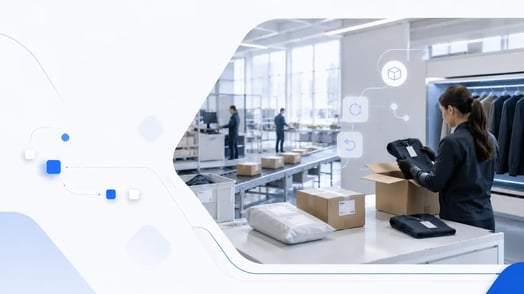
Product returns are often viewed as a cost or operational burden. However, when managed effectively, reverse logistics can become a powerful driver of customer satisfaction, sustainability, and profitability.
As supply chains become increasingly focused on circular economy principles and environmental responsibility, reverse logistics has become a strategic priority for manufacturers, retailers, distributors, and logistics providers.
In this guide, we explore what reverse logistics is, why it matters, and how companies can optimize their returns management processes.
What is reverse logistics?
Reverse logistics refers to the management of goods moving from the end customer back to a manufacturer, distributor, warehouse, or processing center.
Unlike traditional logistics, which focuses on delivering products to customers, reverse logistics manages the return flow of products, packaging, and reusable assets throughout the supply chain.
Reverse logistics includes activities such as:
- Product returns
- Product refurbishment
- Repairs
- Recycling
- Asset recovery
- Reuse of packaging materials
- Product disposal
An effective reverse logistics strategy helps companies reduce waste, recover value from returned products, and improve customer satisfaction.
Why is reverse logistics important?
Reverse logistics is no longer simply a customer service function. It has become a key component of modern supply chain optimization.
Companies implement reverse logistics strategies to:
- Improve customer experience
- Reduce waste
- Support sustainability goals
- Recover value from returned products
- Reduce operational costs
- Strengthen brand reputation
As consumers increasingly expect flexible return options, reverse logistics has become a competitive differentiator.
Common reasons for product returns
Products may be returned for various reasons, including:
- Damaged goods
- Incorrect orders
- Quality issues
- Customer dissatisfaction
- Excess inventory
- Seasonal stock returns
- Product recalls
Reverse logistics also applies to reusable transportation assets such as:
- Returnable pallets
- Reusable crates
- Temperature-controlled containers
- Packaging materials
In some cases, returned goods may generate disputes that require structured freight claims management processes.
Reverse logistics and the product lifecycle
Reverse logistics should be considered from the product design stage.
By integrating end-of-life management into product development, companies can:
- Facilitate repairs
- Improve recyclability
- Simplify disassembly
- Reduce waste
- Lower overall lifecycle costs
Designing products with reverse logistics in mind supports long-term sustainability objectives and circular economy initiatives.
Customer returns: a source of valuable insights
Product returns provide valuable information that can help companies improve products and operations.
Analyzing return data helps identify:
- Product defects
- Quality issues
- Packaging weaknesses
- Delivery problems
- Customer expectations
By understanding why products are returned, businesses can implement corrective actions that reduce future return rates and improve customer satisfaction.
The key stages of reverse logistics
Supporting the customer
The reverse logistics process begins with a smooth and transparent return experience.
Companies should provide:
- Clear return instructions
- Multiple return options
- Responsive customer support
- Real-time communication
A positive returns experience strengthens customer trust and loyalty.
Evaluating returned products
Once a product has been received, it must be inspected and assessed.
Factors typically considered include:
- Product condition
- Residual value
- Repair costs
- Regulatory requirements
The outcome determines the most appropriate recovery strategy.
Product recovery options
Several options are available after inspection.
Restocking and resale
Products in perfect condition can be returned to inventory and resold.
Repair and refurbishment
Defective or damaged products can often be repaired, refurbished, and returned to the market.
Recycling
Products that cannot be repaired may still contain valuable materials that can be recovered and recycled.
Responsible disposal
When no recovery option is possible, products must be disposed of in compliance with environmental regulations.
Reverse logistics and transportation management
Transportation plays a critical role in reverse logistics operations.
Unlike traditional outbound logistics, reverse logistics introduces additional complexity because return flows must be integrated into existing transportation networks.
Managing return pickups
Many carriers combine deliveries and collections during the same route.
This approach is similar to Milk Run logistics principles, where transportation assets are optimized by combining multiple transport activities within a single journey.
To optimize operations, logistics teams must carefully plan:
- Pickup volumes
- Vehicle capacity
- Delivery schedules
- Collection points
Poor planning can disrupt transportation efficiency and increase costs.
Returns visibility
Customers increasingly expect real-time visibility throughout the returns process.
Effective communication and shipment tracking help improve the customer experience while reducing operational uncertainty.
Modern freight management systems help centralize this visibility across all stakeholders.
The role of refurbishment and reuse
One of the main objectives of reverse logistics is to recover value from returned products.
Refurbishment
Refurbishment extends product lifecycles by restoring returned goods to working condition.
Benefits include:
- Reduced waste
- Lower manufacturing requirements
- Increased profitability
Reuse
Products, components, and materials that remain usable can be reintroduced into the supply chain.
This supports circular economy initiatives and reduces dependency on new raw materials.
Recycling and sustainability
Recycling is a critical component of sustainable reverse logistics.
By recovering valuable materials, companies can:
- Reduce landfill waste
- Lower raw material consumption
- Reduce environmental impact
- Support ESG objectives
Recycling programs contribute directly to a more sustainable supply chain.
Organizations increasingly monitor sustainability initiatives through dedicated supply chain KPIs.
Challenges of reverse logistics
Despite its benefits, reverse logistics presents several operational challenges.
Complex transportation planning
Return flows are often unpredictable, making transportation planning more difficult.
Supply chain coordination
Multiple stakeholders must coordinate effectively, including:
- Customers
- Carriers
- Warehouses
- Repair centers
- Recycling facilities
Limited visibility
Without the right tools, tracking returned products can become difficult and time-consuming.
Regulatory compliance
Certain returned products may be subject to environmental or hazardous materials regulations.
Best practices for managing reverse logistics
Develop a clear returns policy
Transparent return policies help set customer expectations and simplify processing.
Analyze return data
Returns data can reveal valuable insights that support continuous improvement.
Centralize collection points
Consolidating return flows helps reduce transportation costs and improve efficiency.
Improve traceability
Barcode, RFID, and tracking technologies provide visibility throughout the reverse supply chain.
Automate processes
Automation improves productivity and reduces manual errors across returns operations.
Strong logistics scheduling practices also help coordinate collection and return activities more efficiently.
How WMS software supports reverse logistics
A WMS software solution helps organizations manage returned products more efficiently.
Key benefits include:
- Real-time inventory visibility
- Product traceability
- Automated sorting and processing
- Returns categorization
- Reporting and performance analysis
A WMS ensures that returned products are processed quickly and consistently.
Organizations often complement WMS capabilities with an ERP-WMS integration strategy to improve end-to-end visibility.
How a TMS improves reverse logistics
A Transportation Management System helps optimize transportation operations across both outbound and return flows.
Benefits include:
- Carrier management
- Freight procurement
- Shipment tracking
- Transportation visibility
- Automated communication
- Performance reporting
A TMS helps organizations integrate reverse logistics into broader transportation strategies while leveraging advanced transportation management system features.
Why use Shiptify for reverse logistics?
Shiptify enables companies to manage transportation flows more efficiently through a collaborative and centralized TMS platform.
With Shiptify, businesses can:
- Centralize transportation data
- Manage multiple carriers from a single platform
- Track return shipments in real time
- Automate transportation workflows
- Improve communication between stakeholders
- Increase visibility across reverse logistics operations
The platform integrates seamlessly with warehouse management systems, helping organizations create a more connected and efficient supply chain.
Companies can also analyze and reduce return-related expenses through improved transportation spend management visibility.
Conclusion
Reverse logistics is no longer simply about handling product returns. It has become a strategic lever for improving customer satisfaction, reducing waste, recovering value, and supporting sustainability initiatives.
By combining effective processes with digital technologies such as WMS and TMS platforms, companies can transform reverse logistics from a cost center into a competitive advantage.
Optimize your reverse logistics operations with Shiptify
Discover how Shiptify helps organizations streamline returns management, improve transportation visibility, and build more sustainable supply chains through a single collaborative platform.