
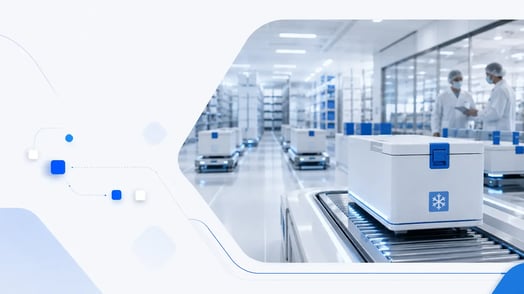
The pharmaceutical industry operates within one of the most demanding supply chain environments in the world.
Strict regulatory requirements, temperature-sensitive products, serialization obligations, and growing pressure to reduce costs all contribute to increasing logistics complexity.
As pharmaceutical products become more sophisticated and global supply chains expand, companies must ensure product integrity, regulatory compliance, and complete traceability from manufacturing to final delivery.
In this guide, we explore the key challenges of pharmaceutical logistics, best practices for managing pharmaceutical supply chains, and how digital technologies can improve operational performance.
What is pharmaceutical logistics?
Pharmaceutical logistics refers to the planning, management, storage, transportation, and monitoring of pharmaceutical products throughout the supply chain.
The objective is to ensure that medicines, medical devices, vaccines, and healthcare products reach patients safely, efficiently, and in full compliance with regulatory requirements.
Pharmaceutical logistics covers:
- procurement of raw materials;
- inventory management;
- warehousing operations;
- transportation management;
- cold chain logistics;
- traceability and compliance;
- returns and recall management.
Because patient safety depends on product quality, pharmaceutical logistics requires a much higher level of control than most other industries.
Why pharmaceutical logistics is becoming more complex
Like many industries, pharmaceutical companies face common logistics challenges such as:
- inventory optimization;
- cost control;
- service quality improvement;
- supply chain visibility.
However, pharmaceutical logistics must also address unique challenges linked to regulatory compliance and product integrity.
Increasing regulatory requirements
The pharmaceutical industry is heavily regulated at both national and international levels.
Companies must comply with strict standards governing:
- storage conditions;
- transportation processes;
- traceability requirements;
- product security;
- quality assurance.
Regulatory frameworks continue to evolve, requiring companies to adapt their logistics operations regularly.
Serialization requirements
One of the most significant developments in recent years has been pharmaceutical serialization.
Serialization was introduced to combat counterfeit medicines and improve supply chain security.
Under serialization regulations, pharmaceutical products must include:
- a unique identification code;
- anti-tampering protection features.
This enables products to be tracked throughout the supply chain and helps prevent falsified medicines from reaching patients.
Serialization impacts every stakeholder involved in pharmaceutical distribution, including manufacturers, distributors, pharmacies, and transportation providers.
The importance of cold chain logistics
Many pharmaceutical products require strict temperature control throughout transportation and storage.
This is particularly true for:
- vaccines;
- biologics;
- cell and gene therapies;
- insulin products;
- specialty medicines.
A temperature excursion can compromise product efficacy and patient safety.
Biopharmaceutical products
Biopharmaceutical products are among the most sensitive healthcare products transported today.
Derived from living organisms, these therapies often require highly controlled environments.
To ensure product integrity, companies rely on:
- temperature-controlled warehouses;
- refrigerated vehicles;
- qualified thermal packaging;
- cold rooms;
- continuous temperature monitoring systems.
Maintaining an uninterrupted cold chain is essential throughout the product lifecycle.
Best practices in pharmaceutical logistics
Successful pharmaceutical logistics operations rely on rigorous processes and continuous monitoring.
Maintain temperature compliance
Storage and transportation conditions must be continuously monitored to preserve product quality.
Ensure complete traceability
Every product movement should be recorded and traceable throughout the supply chain.
Monitor expiration dates
Expiry date management helps prevent product waste and ensures regulatory compliance.
Secure transportation operations
Pharmaceutical shipments require enhanced security measures to prevent:
- theft;
- counterfeiting;
- tampering.
Maintain regulatory compliance
Organizations must comply with local regulations as well as international standards such as Good Distribution Practice (GDP).
Implement quality controls
Regular quality checks throughout the supply chain help ensure product integrity and compliance.
Optimize inventory management
Efficient inventory planning helps reduce stockouts, avoid excess inventory, and lower operating costs.
Train logistics personnel
Employees involved in pharmaceutical logistics must be trained on regulatory requirements, handling procedures, and quality standards.
Manage recalls effectively
Companies must be prepared to identify, isolate, and recover products quickly when recalls occur.
Protect sensitive information
Data security is critical when handling patient information, product specifications, and regulatory documentation.
How digitalization improves pharmaceutical logistics
Digital technologies help pharmaceutical companies improve efficiency, visibility, and compliance.
Route optimization
Transportation software helps optimize delivery routes while reducing costs and transit times.
Benefits include:
- reduced transportation costs;
- lower fuel consumption;
- improved vehicle utilization;
- reduced carbon emissions.
This is particularly important for temperature-controlled transportation, where operational efficiency directly impacts profitability.
Inventory management optimization
Digital tools improve inventory visibility and warehouse operations.
Benefits include:
- improved stock accuracy;
- optimized storage capacity;
- reduced waste;
- better inventory turnover.
Real-time traceability
Modern systems provide complete shipment visibility throughout the supply chain.
This supports:
- serialization requirements;
- regulatory compliance;
- product monitoring;
- recall management.
Why a WMS is critical in pharmaceutical logistics
A Warehouse Management System (WMS) helps pharmaceutical companies manage inventory more effectively.
Key benefits include:
Improved inventory accuracy
Automation reduces manual errors and improves stock visibility.
Full traceability
Products can be tracked at batch, serial number, and expiration date levels.
Regulatory compliance
The WMS helps maintain records required for audits and regulatory inspections.
Storage optimization
Space utilization improves while maintaining product-specific storage conditions.
Cost reduction
Optimized warehouse operations reduce waste and operational expenses.
Companies often complement their WMS with dedicated warehouse management software solutions to improve operational performance.
Why a TMS is essential for pharmaceutical transportation
A Transportation Management System provides greater visibility and control over transportation operations.
Enhanced shipment traceability
Monitor shipments in real time and maintain complete transportation visibility.
Compliance with transport conditions
Track temperature, humidity, and transportation conditions throughout the journey.
Route optimization
Reduce transportation costs while maintaining service quality.
Recall and returns management
Handle product recalls and returns more efficiently.
Improved customer service
Provide accurate delivery information and proactive communication.
Regulatory documentation
Maintain transportation records required for compliance and audits.
Reduced operational risk
Automation helps reduce errors that could compromise product integrity.
Organizations can further strengthen visibility and control through advanced transportation management system features.
Why use Shiptify for pharmaceutical logistics?
Shiptify helps pharmaceutical companies improve transportation visibility, compliance, and operational efficiency.
With Shiptify, logistics teams can:
- centralize transportation management;
- obtain carrier quotations quickly;
- monitor shipments in real time;
- manage transport documentation;
- improve collaboration with logistics partners;
- react proactively to delays and incidents.
As a collaborative freight management system, Shiptify provides a single source of truth for transportation operations.
The platform also supports broader supply chain optimization initiatives by improving visibility and collaboration across stakeholders.
Measuring pharmaceutical logistics performance
Given the critical nature of pharmaceutical products, performance monitoring is essential.
Organizations should track dedicated supply chain KPIs such as:
- on-time delivery rates;
- temperature compliance rates;
- inventory accuracy;
- recall response times;
- transportation costs;
- regulatory compliance indicators.
Continuous monitoring helps reduce risks while improving service quality and operational resilience.
Conclusion
Pharmaceutical logistics is one of the most complex and highly regulated areas of supply chain management.
Organizations must simultaneously ensure product integrity, regulatory compliance, temperature control, and operational efficiency.
By combining robust logistics processes with digital technologies such as WMS and TMS platforms, pharmaceutical companies can improve visibility, reduce risks, and build more resilient supply chains.
Optimize your pharmaceutical logistics operations with Shiptify
Discover how Shiptify helps pharmaceutical companies improve transportation visibility, strengthen compliance, and streamline supply chain operations through a single collaborative platform.