Customer expectations have changed dramatically over the past decade.
Fast delivery is no longer enough. Today, customers expect deliveries to be convenient, flexible, transparent, and frictionless.
This shift has accelerated the adoption of contactless delivery across retail, e-commerce logistics, healthcare, manufacturing, and logistics operations.
Initially driven by health and safety concerns, contactless delivery has evolved into a long-term logistics strategy that improves efficiency, enhances customer satisfaction, and increases operational visibility.
In this article, we will explore what contactless delivery is, how it works, its benefits and challenges, the technologies that support it, and the best practices companies should follow to implement it successfully.
What is contactless delivery?
Contactless delivery is a delivery method that allows goods to be delivered without direct physical interaction between the driver and the recipient. It is also referred to as no-contact delivery or contact-free delivery, depending on the industry and the platform used.
Instead of requiring a signature or a face-to-face handover, deliveries are completed using digital confirmation methods such as:
- Electronic proof of delivery (ePOD)
- QR codes
- Geolocation verification
- Timestamped photographs
- Mobile applications
- Digital signatures
The objective is to provide a secure, traceable, and efficient delivery experience while reducing unnecessary interactions between drivers and recipients.
How contactless delivery works
Although the process may vary depending on the industry and delivery model, most contactless deliveries follow a similar workflow, from order placement to final confirmation.
- The customer selects contactless delivery, either during checkout or transportation planning, and can specify delivery preferences in advance.
- Delivery instructions are shared with the carrier, including the preferred delivery location, access instructions, security requirements, and time preferences.
- Upon arrival, the driver places the shipment in the designated location, such as a front door, reception area, secure locker, loading dock, or another approved collection point, without requiring direct interaction with the recipient.
- The delivery is validated using digital proof, which may include timestamped photographs, GPS coordinates, electronic proof of delivery, a QR code scan, or a mobile application confirmation.
- The customer receives an immediate notification confirming that the shipment has been delivered successfully.
This structured approach ensures that, even without face-to-face contact, every delivery remains traceable and verifiable from start to finish.
Why contactless delivery is growing
Several factors explain the rapid and sustained adoption of contactless delivery across industries.
Changing customer expectations
According to McKinsey & Company, evolving customer demands are reshaping last-mile delivery, with buyers increasingly valuing convenience and flexibility. They want more delivery options, greater visibility, less waiting time, and improved convenience overall. Contactless delivery aligns closely with these expectations.
Increased operational efficiency
Removing manual signature collection and face-to-face interactions helps reduce delivery times across last-mile delivery operations. Drivers can complete more stops per route, which improves productivity and lowers operating costs.
Better traceability
Digital delivery confirmation provides clear visibility throughout the delivery process. This reduces disputes and improves accountability across the supply chain.
Enhanced safety
Contactless delivery also reduces risks associated with high-traffic delivery locations, sensitive environments, healthcare facilities, and industrial sites, creating a safer environment for both drivers and recipients.
Key technologies enabling contactless delivery
Modern contactless delivery relies heavily on digital technologies that replace manual confirmation steps with automated, traceable alternatives.
Electronic proof of delivery (ePOD)
Electronic proof of delivery replaces traditional paper-based confirmation with digital records captured directly on a driver's mobile device. Instead of collecting a physical signature, drivers can capture a photo, a timestamp, GPS coordinates, or a digital signature at the moment of delivery. Benefits of ePOD include real-time visibility, reduced paperwork, faster dispute resolution, and improved delivery accuracy across the entire fleet.
Mobile applications
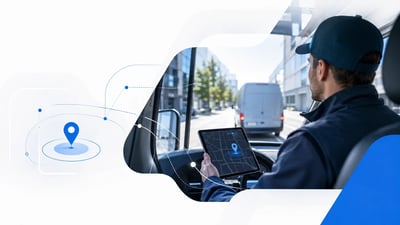
Drivers use mobile applications to access delivery instructions, capture proof of delivery, report exceptions, and communicate updates. These applications improve operational consistency across delivery networks and reduce reliance on phone calls or paper documentation.
GPS and geolocation
Location tracking, such as geo driver tracking, helps verify that deliveries are completed in the correct location. This increases transparency and reduces delivery disputes, particularly for time-sensitive or high-value shipments.
Smart lockers
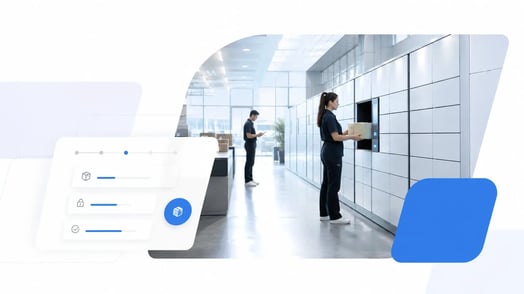
Smart lockers allow recipients to collect goods at their convenience. These solutions are increasingly popular for e-commerce, urban logistics, click-and-collect operations, and high-density residential areas.
Faster delivery operations
Eliminating manual signatures reduces stop times. Drivers can complete routes more efficiently while maintaining service quality.
Reduced failed deliveries
Digital communication and flexible delivery options help reduce unsuccessful delivery attempts, which lowers transportation costs and improves customer satisfaction.
Improved customer experience
Customers gain greater flexibility and control over deliveries. They can receive products even when they are not physically present, without compromising on traceability.
Better visibility
Real-time delivery data improves decision-making for logistics teams. Companies can identify bottlenecks, monitor service levels, and optimize operations continuously.
Challenges of contactless delivery
Security concerns
Leaving products unattended can increase theft risks in certain environments. Companies must carefully select delivery locations and verification procedures to limit this exposure.
Technology adoption
Successful implementation requires mobile devices, software integration, driver training, and process standardization. Organizations without sufficient digital maturity may face implementation challenges when rolling out contactless delivery at scale.
Customer preferences
Not every customer prefers contactless delivery. Businesses should continue offering multiple delivery options to accommodate different needs and preferences.
Best practices for implementing contactless delivery
Companies that successfully deploy contactless delivery generally follow a few consistent principles.
- Standardize delivery instructions and proof-of-delivery requirements across all carriers and locations, rather than leaving them to individual driver judgment.
- Always pair contactless handoffs with digital proof of delivery, such as photos, timestamps, or GPS data, to avoid disputes and support issues.
- Train drivers and carrier partners on delivery locations, exception handling, and communication protocols before rolling out contactless delivery at scale.
- Offer contactless delivery as an option rather than a default, so customers who prefer a direct handover can still choose it.
- Centralize delivery data in a single platform to monitor performance, detect recurring issues, and continuously improve service quality.
Following these practices helps businesses capture the efficiency benefits of contactless delivery while keeping security, traceability, and customer satisfaction under control.
Industry applications
Retail and e-commerce
Retailers use contactless delivery to improve convenience and reduce delivery friction. Smart lockers, click-and-collect services, and secure drop-off points have become common solutions. This trend is particularly important in modern retail logistics, where customer experience increasingly depends on delivery flexibility.
Healthcare
Hospitals, laboratories, and pharmacies increasingly rely on contactless delivery for sensitive products. Digital traceability helps ensure compliance and chain-of-custody requirements.
Manufacturing and industrial logistics
Industrial companies use contactless delivery to improve spare parts distribution and maintenance operations. Critical components can be delivered to secure locations without requiring personnel to be present.
Urban logistics
Cities face increasing congestion and delivery restrictions. Contactless delivery solutions help streamline urban distribution while improving operational efficiency.
Why transport visibility matters
Contactless delivery generates large volumes of operational data. Without proper visibility, businesses struggle to fully benefit from this information.
Transportation management platforms help centralize delivery statuses, proof of delivery, carrier communications, exception management, and performance analytics.
A modern supply chain dashboard can help logistics teams transform this data into actionable insights, creating a more connected and efficient logistics operation.
How a TMS supports contactless delivery
A modern Transportation Management System plays a critical role in orchestrating contactless delivery processes.
A TMS helps companies plan deliveries more efficiently, share delivery instructions with carriers, track shipments in real time, centralize proof of delivery, monitor carrier performance, and manage delivery exceptions from a single interface.
By combining contactless delivery with transportation visibility, businesses can improve service quality while maintaining full operational control.
Conclusion
Contactless delivery has evolved from a temporary solution into a long-term logistics strategy.
By reducing friction, improving traceability, and increasing operational efficiency, it benefits both customers and logistics teams.
As digital technologies continue to evolve, contactless delivery will become increasingly integrated into modern transportation networks.
Organizations that invest in visibility, automation, and digital proof-of-delivery solutions will be better positioned to meet growing customer expectations while improving logistics performance.