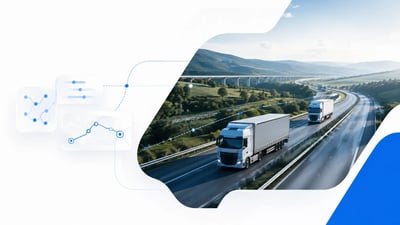
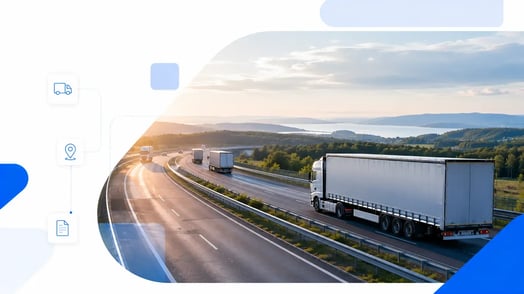
Road cabotage plays an important role in European freight transportation.
By allowing foreign carriers to perform domestic transport operations within another country after completing an international delivery, cabotage helps reduce empty miles, improve fleet utilization, and increase transportation efficiency.
However, road cabotage is strictly regulated within the European Union, and additional restrictions apply to UK hauliers operating in the EU since Brexit. Transport companies must comply with specific rules to ensure fair competition and avoid significant penalties.
In this guide, we'll explain how road cabotage works, its benefits, the applicable regulations, and how digital tools can help companies remain compliant.
What is road cabotage?
Road cabotage refers to domestic freight transport operations carried out temporarily by a foreign carrier within another country after completing an international transport operation.
For example, a Spanish transport company delivering goods to France may subsequently perform domestic transport operations between French cities before returning to Spain.
The objective of cabotage is to improve transportation efficiency by reducing empty return journeys and maximizing vehicle utilization. As part of broader freight transport operations, cabotage contributes to a more efficient use of transportation capacity across Europe.
Why is road cabotage important?
Road cabotage creates benefits for carriers, shippers, and the environment.
Improved fleet utilization
Cabotage allows carriers to generate additional revenue instead of returning empty after completing an international delivery.
This improves:
- vehicle productivity;
- fleet utilization rates;
- transportation profitability.
Lower transportation costs
Reducing empty miles contributes to lower operating costs, including:
- fuel expenses;
- driver costs;
- vehicle operating costs.
Effective transportation spend management helps companies measure and maximize these savings.
Greater flexibility
Cabotage increases transportation capacity within local markets and helps respond more quickly to freight demand.
Environmental benefits
By reducing empty trips, cabotage contributes to:
- lower fuel consumption;
- reduced CO₂ emissions;
- improved transportation sustainability.
This directly supports broader supply chain optimization initiatives.
Types of road cabotage
National cabotage
National cabotage involves domestic freight transportation performed by a foreign carrier within another country. This type of operation is subject to strict European regulations.
Cabotage following international transport
The most common form of cabotage occurs after an international delivery.
For example, a Polish truck delivering goods to Marseille may perform additional domestic deliveries within France before returning to Poland. This enables more efficient use of transportation resources while maintaining regulatory compliance.
In some multimodal logistics networks, cabotage operations may complement intermodal transportation strategies.
Who can perform road cabotage?
Road cabotage is reserved for transport operators established in:
- European Union member states;
- European Economic Area (EEA) countries.
To perform cabotage operations legally, carriers must first complete an international transport operation. They must also be able to provide documentation proving the international shipment that preceded the cabotage activity.
EU cabotage rules
Road cabotage within the European Union is governed by Regulation (EC) No. 1072/2009, as updated by the EU Mobility Package I. The objective is to balance transportation efficiency with fair competition between domestic and foreign carriers.
Main cabotage requirements
A carrier must:
- complete an international transport operation before performing cabotage;
- carry supporting transport documentation;
- comply with local labor regulations where applicable;
- respect all cabotage restrictions established by EU legislation.
The three-operation rule
In many situations, a carrier established in the EU or EEA may perform up to three cabotage operations within seven days following the unloading of the international shipment.
Compliance with this rule is essential to avoid sanctions.
Cabotage rules for UK hauliers post-Brexit
Since the UK left the EU customs union, UK-established hauliers no longer benefit from the same cabotage rights as EU/EEA carriers. Under the UK-EU Trade and Cooperation Agreement, UK operators delivering goods into the EU are generally limited to a maximum of two cabotage operations within seven days of unloading, rather than three. Additional cross-trade restrictions also apply. UK transport companies should refer directly to official UK government guidance to confirm current requirements, as rules continue to evolve.
Driver compliance
Drivers must comply with applicable labor regulations, including:
- driving time requirements;
- rest period regulations;
- posting of workers rules where relevant.
Penalties for non-compliance
Failure to comply with cabotage regulations can result in significant penalties.
Potential sanctions may include:
- financial penalties;
- vehicle immobilization;
- temporary cabotage bans;
- additional administrative sanctions.
Authorities may also impose fines when carriers fail to provide complete transport documentation during inspections. Documents such as the CMR consignment note are essential to demonstrate compliance during roadside inspections.
Because regulations continue to evolve, transport companies must maintain rigorous compliance procedures.
Benefits of road cabotage for logistics operations
When properly managed, cabotage supports more efficient supply chains.
Reduced empty miles
One of the primary objectives of cabotage is reducing non-productive vehicle movements.
Better resource utilization
Carriers can maximize the use of existing transportation capacity.
Faster response to local demand
Cabotage increases flexibility and helps address temporary transportation shortages.
Improved sustainability
Fewer empty journeys contribute directly to lower greenhouse gas emissions.
Challenges of road cabotage
Despite its advantages, cabotage creates operational and regulatory challenges.
Regulatory complexity
Transport companies must monitor evolving European regulations and country-specific requirements, including divergent UK and EU rules.
Documentation management
Every operation must be supported by accurate transport documentation.
Compliance monitoring
Failure to respect cabotage limits can result in significant penalties.
Operational visibility
Managing international and domestic transport operations simultaneously requires strong visibility and coordination.
How a TMS helps manage road cabotage
A Transportation Management System can significantly simplify cabotage management.
Route optimization
The TMS helps reduce empty miles by identifying efficient transportation opportunities.
Regulatory compliance
Transport documentation can be centralized and archived for easier compliance management.
Real-time visibility
Transportation teams gain visibility into shipments, vehicle movements, and operational performance.
Capacity utilization
The TMS helps maximize truck utilization while ensuring compliance with applicable regulations.
Performance monitoring
Companies can monitor key transportation KPIs and identify opportunities for continuous improvement. Relevant supply chain KPIs help measure fleet efficiency, carrier performance, and transportation profitability.
Modern transportation management system features further support compliance monitoring and operational control.
Why use Shiptify for cabotage management?
Shiptify provides transportation teams with the visibility and control required to manage international freight operations efficiently.
Centralized transportation management
Manage international and domestic transport operations through a single platform.
Digital document management
Store and access transport documents required for compliance and inspections.
Shipment visibility
Track transportation activities in real time across multiple carriers and countries.
Operational efficiency
Improve planning, reduce empty miles, and optimize transportation costs.
As a comprehensive freight management system, Shiptify helps logistics teams centralize transportation execution and compliance management. Organizations can also leverage advanced TMS software to improve carrier collaboration and transportation planning.
Conclusion
Road cabotage is an important component of European freight transportation.
When managed correctly, it improves fleet utilization, reduces empty mileage, lowers transportation costs, and supports more sustainable logistics operations.
However, strict and evolving regulatory requirements, including diverging UK and EU rules since Brexit, make compliance essential.
By combining operational expertise with digital tools such as a Transportation Management System, companies can take full advantage of cabotage opportunities while remaining compliant with European and UK regulations.