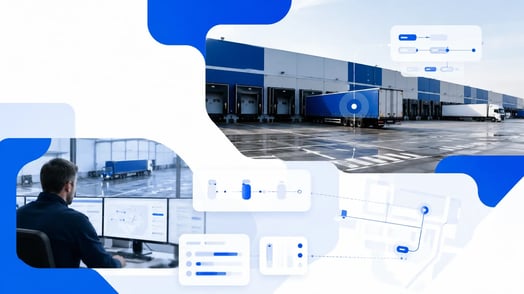
For many logistics providers, the warehouse yard remains one of the least visible areas of the supply chain.
Companies invest heavily in Warehouse Management Systems (WMS), Transportation Management Systems (TMS), automation technologies, and inventory optimization tools. Yet once a truck enters the yard, visibility often disappears.
This lack of control creates congestion, increases detention costs, slows warehouse operations, and reduces overall productivity.
For third-party logistics providers (3PLs), efficient yard management has become a strategic priority. A modern Yard Management System (YMS) helps transform the yard from a bottleneck into a highly coordinated logistics hub.
In this guide, we explain how yard management system software improves warehouse operations, why it matters for 3PLs, and how integrating YMS, WMS, and TMS creates a more agile supply chain.
What is a yard management system (YMS)?
A yard management system (YMS) is a software application that tracks and coordinates trailers, containers, and trucks within a distribution yard, giving warehouse teams real-time visibility to improve dock scheduling, reduce congestion, and speed up trailer processing.
It provides real-time visibility into yard operations, allowing warehouse teams to know:
- Which trailers are currently on site
- Where each trailer is located
- What inventory is waiting inside each trailer
- Which dock doors should be assigned
- Which trailers require immediate processing
By connecting transportation and warehouse operations, a YMS eliminates one of the largest visibility gaps in the supply chain and contributes to broader supply chain optimization initiatives.
Why yard visibility matters for 3PLs
Many logistics facilities assume a full yard is a sign of strong activity.
In reality, a congested yard often indicates poor coordination between transportation and warehouse operations.
Without real-time visibility, companies face several challenges:
- Trailers used as temporary storage
- Long truck queues at dock doors
- Delayed unloading operations
- Increased detention and demurrage costs
- Reduced warehouse productivity
- Lower customer satisfaction
For a 3PL, every minute spent searching for a trailer or waiting for a dock directly impacts profitability. According to the American Transportation Research Institute, driver detention cost the trucking industry an estimated 11.5 billion dollars in lost productivity in 2023, a clear illustration of how poor yard coordination translates directly into financial loss.
From storage area to transit platform
Modern logistics facilities are evolving beyond traditional storage models.
Today, customers expect:
- Faster inventory turnover
- Real-time visibility
- Shorter lead times
- Greater responsiveness
As a result, the yard is becoming a dynamic extension of the warehouse rather than a simple parking area.
This evolution is closely linked to the rise of efficient inbound logistics processes and faster freight flows.
Real-time yard visibility
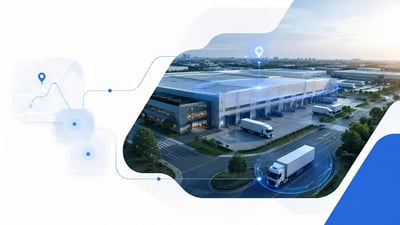
One of the biggest advantages of a YMS is complete visibility over all transport assets.
Using technologies such as:
- GPS tracking
- RFID identification
- IoT sensors
- Mobile applications
companies can monitor trailer locations in real time.
When integrated with a warehouse management software solution, operators gain visibility not only into inventory stored inside the warehouse, but also inventory waiting inside arriving trailers.
For example: a trailer containing high-demand products arrives several hours earlier than expected. The YMS immediately updates its status. The WMS identifies the inventory as a priority. Warehouse managers can adjust labor resources and dock assignments accordingly.
This level of visibility improves decision-making and accelerates inbound logistics operations.
Optimizing trailer movements and dock assignments
Many facilities still operate on a first-in, first-out (FIFO) basis for trailer processing.
While simple, this approach rarely reflects operational priorities.
A modern YMS enables dynamic trailer scheduling.
Instead of processing trucks based solely on arrival time, the system prioritizes trailers according to:
- Inventory urgency
- Customer orders
- Production requirements
- Warehouse workload
- Carrier schedules
This ensures the right products reach the right dock at the right time.
Dynamic dock scheduling
A YMS continuously evaluates:
- Dock availability
- Trailer locations
- Warehouse priorities
- Appointment schedules
As conditions change, the system automatically recommends the most efficient dock assignments.
The result is:
- Faster unloading
- Reduced congestion
- Better labor utilization
- Improved truck turnaround times
Many facilities combine YMS capabilities with dedicated dock appointment scheduling tools to maximize dock utilization.
Reducing dock congestion
Dock congestion remains one of the most expensive inefficiencies in warehouse operations.
When warehouse activities and transportation schedules are disconnected, bottlenecks quickly appear.
By integrating a YMS with a Transportation Management System (TMS), organizations can synchronize:
- Carrier appointments
- Warehouse capacity
- Labor availability
- Shipment priorities
This coordination significantly reduces waiting times and improves overall throughput.
For 3PL providers managing hundreds of daily vehicle movements, these gains can translate into substantial cost savings while helping companies reduce supply chain costs.
The power of YMS, WMS and TMS integration
Many logistics organizations operate with disconnected systems.
The WMS manages inventory.
The TMS manages transportation.
The YMS manages yard operations.
When these systems operate independently, visibility gaps emerge.
The most efficient logistics facilities create a fully connected ecosystem.
The WMS
The Warehouse Management System controls:
- Inventory
- Receiving
- Storage
- Picking
- Packing
Understanding the differences between ERP and WMS systems is essential when building this technology stack.
The TMS
The Transportation Management System manages:
- Carrier selection
- Shipment planning
- Route optimization
- Freight costs
- Shipment tracking
Modern organizations increasingly leverage advanced transportation management system features to improve coordination across logistics operations.
The YMS
The Yard Management System coordinates:
- Trailer locations
- Dock scheduling
- Yard traffic
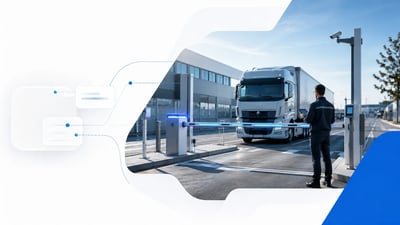
- Gate operations
- Appointment management
Together, these systems create a continuous flow of information from transportation planning to final warehouse execution.
Cross-docking and flow optimization
Cross-docking has become a major competitive advantage for 3PL providers.
Instead of storing products, companies transfer goods directly from inbound trailers to outbound shipments. This approach significantly reduces handling times, inventory levels, and storage costs.
A YMS plays a critical role by:
- Prioritizing incoming trailers
- Coordinating dock availability
- Synchronizing transportation schedules
- Accelerating inventory movement
Organizations implementing efficient cross-docking strategies can dramatically improve throughput while reducing warehouse congestion.
For high-volume distribution centers, this model transforms the yard into a dynamic transit platform rather than a traditional storage area.
How artificial intelligence is transforming yard management
The next generation of yard management solutions increasingly relies on artificial intelligence.
AI-powered YMS platforms can:
- Predict transportation delays
- Anticipate dock congestion
- Optimize trailer movements
- Recommend labor allocation
- Improve appointment scheduling
Some facilities are also deploying:
- Autonomous Mobile Robots (AMRs)
- Automated Guided Vehicles (AGVs)
- Smart sensors
to further automate yard operations. According to McKinsey, warehouse automation adoption is growing by more than 10 percent per year, with robot shipments expected to rise by up to 50 percent annually through 2030, a trend that is increasingly extending from warehouse floors into yard operations.
These technologies help reduce labor shortages while increasing operational efficiency.
Combined with real-time shipment tracking capabilities, AI provides unprecedented visibility across transportation and warehouse operations.
Benefits of yard management software for 3PLs
Organizations implementing a YMS typically experience improvements across several key performance indicators.
Reduced detention and demurrage costs
Better trailer coordination minimizes unnecessary carrier waiting times, directly reducing the detention charges that erode margins on every load.
Improved warehouse productivity
Operators spend less time locating trailers and more time processing freight, which translates into higher throughput per labor hour.
Greater yard safety
Fewer vehicle movements and better traffic control reduce accident risks for both yard personnel and drivers.
Better customer experience
Customers gain visibility into inventory and shipment status throughout the entire logistics process, which strengthens trust and reduces support requests.
Increased operational agility
Real-time visibility enables faster responses to unexpected disruptions, such as late arrivals, labor shortages, or sudden order priority changes.
These improvements are often reflected in broader supply chain KPIs monitored by logistics organizations.
How to implement a yard management system
Step 1: assess current operations
Identify bottlenecks and visibility gaps across:
- Gate operations
- Trailer movements
- Dock scheduling
- Carrier coordination
A detailed operational audit helps determine where efficiency improvements will generate the greatest return on investment.
Step 2: select the right solution
Choose a YMS that integrates easily with your existing WMS and TMS environment.
The ability to connect with a broader freight management system ecosystem is increasingly important as logistics operations become more interconnected.
Step 3: digitize data collection
Implement:
- RFID technology
- GPS tracking
- IoT sensors
- Mobile applications
to automate yard visibility.
This data can then feed centralized reporting tools such as a supply chain dashboard, allowing managers to monitor performance in real time.
Step 4: train operational teams
Successful adoption requires alignment across:
- Warehouse teams
- Yard operators
- Security personnel
- Transportation planners
Technology alone is not enough. Clear processes and employee training are essential for long-term success.
Why yard management is becoming a strategic priority
Supply chains continue to face increasing pressure from:
- Labor shortages
- Transportation disruptions
- Rising logistics costs
- Customer expectations for faster deliveries
As a result, the warehouse yard can no longer remain a blind spot.
Organizations that improve yard visibility and dock coordination gain a significant competitive advantage. Gartner identifies autonomy and intelligent, self-directed systems as one of the top supply chain technology trends for 2026, a shift that applies directly to yard and dock operations.
Many logistics leaders now view the yard as an extension of both transportation and warehouse operations, making it a critical component of modern logistics scheduling strategies.
Outbound logistics starts in the yard
Yard performance directly impacts outbound transportation execution.
If trailers are not positioned correctly or dock assignments are delayed, outbound shipments leave later than planned, increasing transportation costs and negatively affecting service levels.
This is why many organizations are investing in specialized outbound dock management solutions to better coordinate departures and carrier operations.
Efficient outbound processes help reduce congestion while improving asset utilization across the facility.
Smart dock management with Shiptidock
Modern logistics facilities increasingly rely on digital dock scheduling solutions to coordinate carrier arrivals and departures.
Solutions such as Shiptidock help organizations automate appointment booking, improve dock visibility, and reduce truck waiting times.
When integrated with a YMS, dock scheduling software creates a seamless connection between transportation planning and warehouse execution.
The result is:
- Better dock utilization
- Faster truck turnaround
- Improved carrier collaboration
- Reduced operational costs
For 3PL providers, this visibility can become a significant competitive differentiator.
Why Shiptify helps improve yard operations
As transportation and warehouse operations become increasingly interconnected, logistics teams need tools that provide visibility across the entire supply chain.
Shiptify helps organizations connect transportation planning, dock operations, carrier collaboration, and warehouse execution through a centralized platform.
By combining transportation visibility, dock scheduling, and carrier communication, companies can:
- Reduce congestion
- Improve dock utilization
- Increase shipment visibility
- Streamline carrier communication
- Improve operational performance
Organizations managing large transportation networks can also benefit from better control of their transportation spend management strategy by reducing detention charges, improving resource utilization, and optimizing carrier operations.
Improved transportation visibility
One of the biggest challenges in yard management is the lack of visibility between transportation and warehouse teams.
Shiptify centralizes transportation data and provides real-time information on shipments, carrier activities, and dock operations.
This visibility is particularly valuable for companies managing high volumes of freight transport across multiple sites and carriers.
Better carrier collaboration
Efficient yard management depends heavily on communication between logistics teams and transport providers.
Through a collaborative platform, carriers can access appointment information, shipment updates, and operational instructions before arriving on site.
This helps reduce misunderstandings, eliminate manual coordination, and improve execution quality.
Supporting multimodal operations
As supply chains become more complex, many organizations increasingly rely on multimodal transport solutions to optimize cost, sustainability, and delivery performance.
A connected YMS environment helps coordinate inbound and outbound flows regardless of transportation mode, ensuring better synchronization between road, rail, sea, and intermodal operations.
Faster dock operations
The efficiency of a logistics facility often depends on the performance of each loading dock.
When dock activities are properly synchronized with transportation schedules and warehouse priorities, facilities can significantly increase throughput while reducing delays.
This directly improves warehouse productivity and carrier satisfaction.
Better transportation procurement
Visibility into yard activities also improves transportation planning and procurement decisions.
Companies can more accurately evaluate carrier performance, identify inefficiencies, and optimize future transportation sourcing strategies.
Many organizations complement these initiatives with digital freight quotation processes to improve carrier selection and cost control.
Future trends in yard management
The role of the warehouse yard will continue to evolve over the coming years.
Several trends are already reshaping how logistics facilities operate:
Greater automation
Automation technologies will increasingly support:
- Gate operations
- Trailer identification
- Dock assignments
- Yard movements
This will help reduce manual processes and improve operational consistency.
AI-driven decision making
Artificial intelligence will continue improving:
- Arrival predictions
- Congestion forecasting
- Resource allocation
- Trailer prioritization
The ability to make proactive decisions before disruptions occur will become a major competitive advantage.
End-to-end visibility
Future logistics ecosystems will connect transportation, yard operations, warehouses, and customers through a single source of truth.
Organizations that successfully eliminate visibility gaps will improve responsiveness, reduce costs, and strengthen customer satisfaction.
Sustainability and asset optimization
Growing pressure to reduce emissions and improve operational efficiency will encourage companies to maximize asset utilization.
Better yard management helps reduce:
- Vehicle idle time
- Empty movements
- Fuel consumption
- Congestion-related emissions
These improvements contribute directly to both financial and environmental objectives.
Conclusion
The warehouse yard is no longer just a parking area.
For modern 3PL providers, it has become a strategic component of supply chain performance.
A Yard Management System delivers the visibility, coordination, and automation required to transform yard operations into a competitive advantage.
By providing real-time visibility into trailers, dock activities, transportation flows, and warehouse priorities, a YMS helps organizations reduce congestion, improve productivity, lower costs, and strengthen customer service.
When combined with WMS and TMS technologies, a YMS creates a fully synchronized logistics ecosystem capable of supporting increasingly complex supply chains.
Organizations that invest in yard visibility today will be better positioned to improve efficiency, increase resilience, and meet the growing expectations of customers and transportation partners tomorrow.
Optimize your yard operations with Shiptify
Discover how Shiptify helps logistics teams connect transportation planning, dock scheduling, carrier collaboration, and warehouse execution through a single collaborative platform.
Gain greater visibility, reduce congestion, improve asset utilization, and build a more efficient logistics operation from the yard to the final delivery.